Category: Techniques

  • Layered Rounds – Left Handed

    Layered Rounds – Left Handed

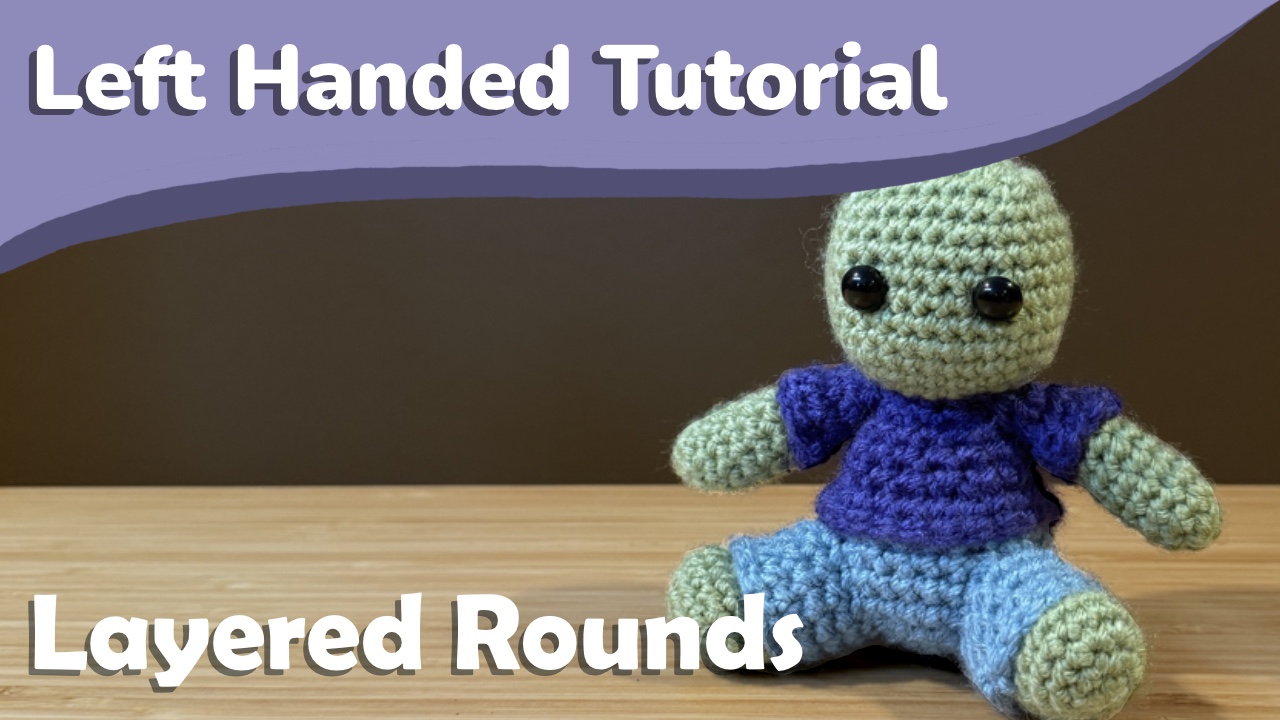
    In this post, we’ll cover how to layer rounds in a crochet project to add a bit of depth to a project. This technique allows a layer to be added to a crochet item without modifying the underlying pattern!

    If you’re right handed, you can find that tutorial here, or if you prefer a video tutorial, you can check that out here.

    The setup

    First, make the piece to be overlapped. Make sure you work up through the round to be overlapped. In this example, I want round 9 to be overlapped, so I make what I’ll call my “existing piece” through round 9.

    You can cut the yarn for this piece. Don’t sew the end in though- leave it free. It’ll make it easier to work through the stitches in this piece later on.

    Making the Overlapping Ring

    First, we need to make the overlapping layer. This round will have the same stitch count as the round we’re looking to overlap. In this example, we’re overlapping a round of 24 stitches, so we need this overlapping layer to be 24 stitches as well.

    Make a chain the same length as the number of stitches in the round to be overlapped (chain 24, in this example).

    Now, making sure the chain isn’t twisted, slip stitch into the back bump of the first chain, closing the chain into a loop.

    Chain 1, and single crochet into the same bump you slip stitched into.

    Now crochet around the chain loop, placing a single crochet in the back bumps of each chain.

    For this example, you’ll end up with 24 total stitches in your round.

    If you’re struggling to crochet in the back bumps of your chain, or otherwise don’t want to do that, you can always crochet into the top of your chain. I just prefer the look of working into the back bumps.

    Connecting the Pieces

    In this round, we’ll be connecting both pieces together by crocheting through both of them at once.

    Start by finding the first stitch of your ring. Insert your hook into this stitch.

    Maneuver the outer layer so that your hook is going through the middle of the ring. This makes it easier to go through the existing piece.

    Now, find the first stitch of your existing piece. Insert your hook into this stitch as well.

    Move your hook back through the middle of the outer ring. Your hook is now going through both the ring and the existing piece, with the yarn also going towards the middle of the ring. It should look like the image below. This ensures that nothing gets wrapped up incorrectly.

    Now, complete a single crochet through both of these rounds at once to connect them.

    The connecting layer

    The connecting layer that we’ve started will follow the next round in whatever pattern you’re working from. For example, in this post, the overlapping layer is round 9, so our connecting round is round 10. I’d follow the instructions for round 10 of the pattern I’m working from when connecting the two pieces together.

    If your connecting round is worked by just single crocheting around the piece, this step is really simple. Continue single crocheting through both layers at once, first inserting your hook through the outer layer, then through the existing piece.

    If your connecting layer

    Increasing in the connecting round

    If your connecting round has increases, simply do a single crochet through the same stitches as you just worked to increase. Make sure you still go through both the outer layer and the existing piece!

    Decreasing in the connecting round

    If your connecting round has decreases, what I suggest is to invisible decrease in both the outer layer and existing piece.

    To do this, first set up an invisible decrease for the outer layer (tutorial here) by putting your hook through the front loops of the next two stitches. Don’t actually stitch into this- just keep the loops on your hook!

    Now, set up an invisible decrease on the existing piece. This can be a little tricky.

    Your hook should be going through the front loops of 4 stitches at this point- first on the outer layer, then on the existing piece. Now, complete a single crochet through these loops.

    Continuing the pattern

    You can now continue your pattern as normal! In this example, my overlapping round was round 9, my connecting round was round 10, so I’ll pick my pattern back up starting from round 11.

    The fact that we’re able to follow the pattern exactly as written except for the addition of this outer round is something I think is really neat and useful for adding a little bit more detail and texture to patterns you might come across.


  • Layered Rounds – Right Handed

    Layered Rounds – Right Handed

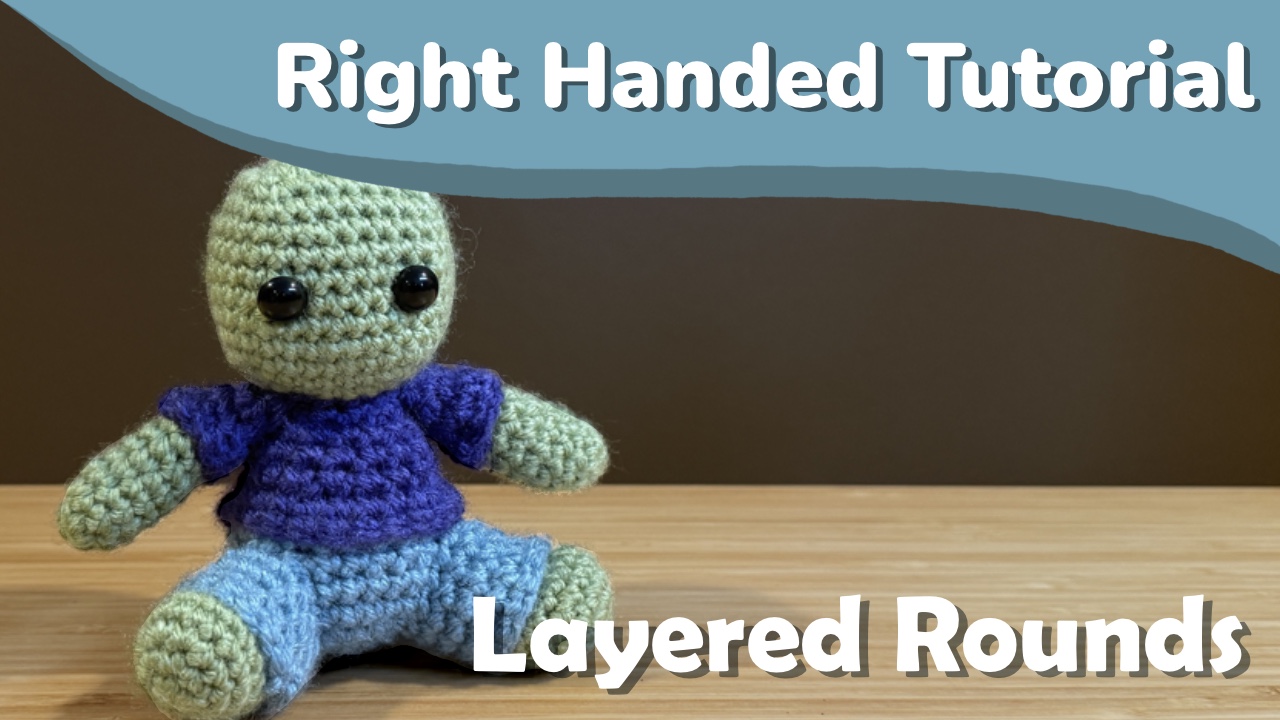
    In this post, we’ll cover how to layer rounds in a crochet project to add a bit of depth to a project. This technique allows a layer to be added to a crochet item without modifying the underlying pattern!

    If you’re left handed, you can find that tutorial here, or if you prefer a video tutorial, you can check that out here.

    The setup

    First, make the piece to be overlapped. Make sure you work up through the round to be overlapped. In this example, I want round 9 to be overlapped, so I make what I’ll call my “existing piece” through round 9.

    You can cut the yarn for this piece. Don’t sew the end in though- leave it free. It’ll make it easier to work through the stitches in this piece later on.

    Making the Overlapping Ring

    First, we need to make the overlapping layer. This round will have the same stitch count as the round we’re looking to overlap. In this example, we’re overlapping a round of 24 stitches, so we need this overlapping layer to be 24 stitches as well.

    Make a chain the same length as the number of stitches in the round to be overlapped (chain 24, in this example).

    Now, making sure the chain isn’t twisted, slip stitch into the back bump of the first chain, closing the chain into a loop.

    Chain 1, and single crochet into the same bump you slip stitched into.

    Now crochet around the chain loop, placing a single crochet in the back bumps of each chain.

    For this example, you’ll end up with 24 total stitches in your round.

    If you’re struggling to crochet in the back bumps of your chain, or otherwise don’t want to do that, you can always crochet into the top of your chain. I just prefer the look of working into the back bumps.

    Connecting the Pieces

    In this round, we’ll be connecting both pieces together by crocheting through both of them at once.

    Start by finding the first stitch of your ring. Insert your hook into this stitch.

    Maneuver the outer layer so that your hook is going through the middle of the ring. This makes it easier to go through the existing piece.

    Now, find the first stitch of your existing piece. Insert your hook into this stitch as well.

    Move your hook back through the middle of the outer ring. Your hook is now going through both the ring and the existing piece, with the yarn also going towards the middle of the ring. It should look like the image below. This ensures that nothing gets wrapped up incorrectly.

    Now, complete a single crochet through both of these rounds at once to connect them.

    The connecting layer

    The connecting layer that we’ve started will follow the next round in whatever pattern you’re working from. For example, in this post, the overlapping layer is round 9, so our connecting round is round 10. I’d follow the instructions for round 10 of the pattern I’m working from when connecting the two pieces together.

    If your connecting round is worked by just single crocheting around the piece, this step is really simple. Continue single crocheting through both layers at once, first inserting your hook through the outer layer, then through the existing piece.

    If your connecting layer

    Increasing in the connecting round

    If your connecting round has increases, simply do a single crochet through the same stitches as you just worked to increase. Make sure you still go through both the outer layer and the existing piece!

    Decreasing in the connecting round

    If your connecting round has decreases, what I suggest is to invisible decrease in both the outer layer and existing piece.

    To do this, first set up an invisible decrease for the outer layer (tutorial here) by putting your hook through the front loops of the next two stitches. Don’t actually stitch into this- just keep the loops on your hook!

    Now, set up an invisible decrease on the existing piece. This can be a little tricky.

    Your hook should be going through the front loops of 4 stitches at this point- first on the outer layer, then on the existing piece. Now, complete a single crochet through these loops.

    Continuing the pattern

    You can now continue your pattern as normal! In this example, my overlapping round was round 9, my connecting round was round 10, so I’ll pick my pattern back up starting from round 11.

    The fact that we’re able to follow the pattern exactly as written except for the addition of this outer round is something I think is really neat and useful for adding a little bit more detail and texture to patterns you might come across.

  • Mirrored Single Crochet – Left Handed

    Mirrored Single Crochet – Left Handed

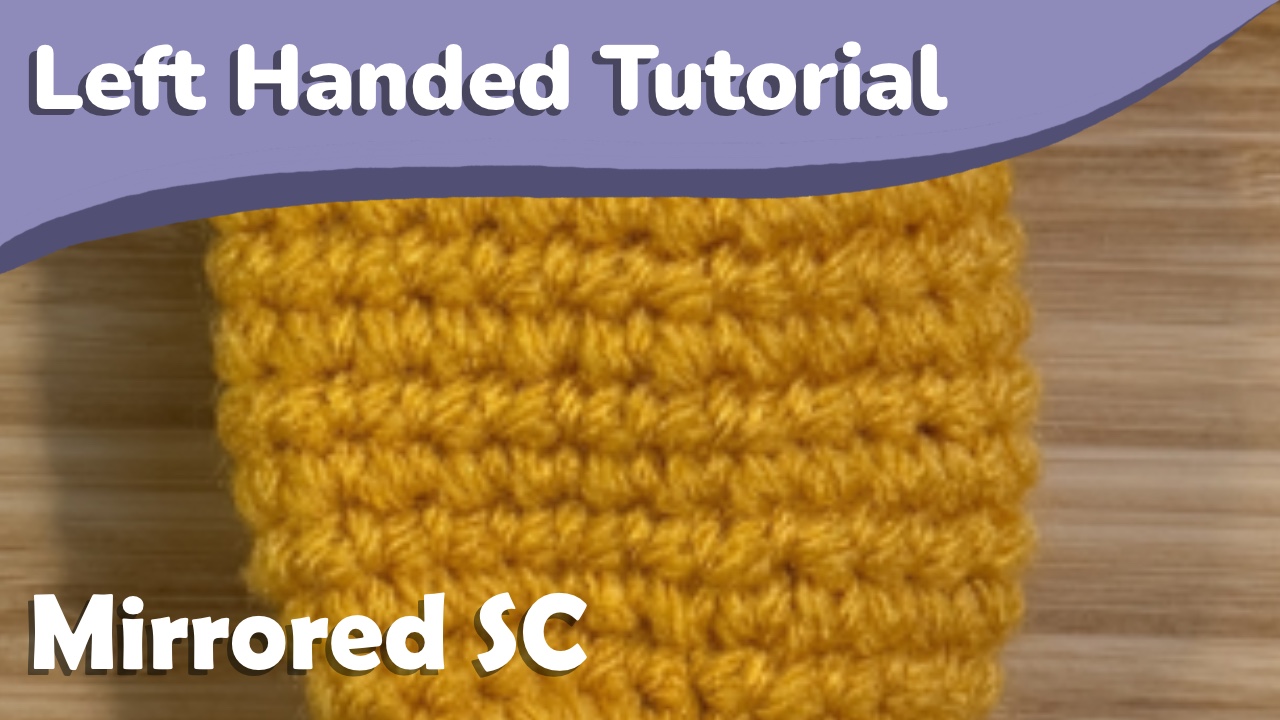
    In this post, we’ll cover how to do a mirrored single crochet. This is a fairly niche technique that allows us to crochet as if we were using our non-dominant hand without learning to crochet right-handed. That said, this can be really awkward to do at first, but is incredibly useful when switching between working in continuous rounds and working in rows to mitigate the texture difference between the two.

    Comparison of normal sc and mirrored sc- on the right mirrored rows and normal rows alternate to keep the fronts of the single crochets on the same side.

    If you’re right handed, check that tutorial out here, and if you prefer a video tutorial, you can find that here.

    Single Crochet

    First I want to look at how a single crochet is worked in a little more depth so that we can ensure that our mirrored stitches are exactly matching how we’d work a normal single crochet.

    When we grab our yarn while working a single crochet, we turn the hook towards us, or towards the front of our work.

    This means that when we work a mirrored stitch, we want to turn the hook away from us.

    Mirroring the stitch

    Since we’re treating this as if it’s being worked with our other hand, we want to go into the next stitch through the back of our work. This will end up being the front of our mirrored stitch.

    We then lay the yarn over the hook, and grab it by turning the hook away from us.

    We pull that loop up to get two loops on our hook.

    We now do the same thing to complete the mirrored stitch. Lay the yarn over the hook, and grab it by turning the hook away. Pull this loop through both loops on your hook.

    That’s how we work a mirrored single crochet! This can be applied to other stitches as well. Pay close attention to how your hook moves while working as you normally would, and mirror it as we’ve done here. If you’re having trouble figuring out the mirrored version of a stitch, what I’ve done is taken a video from the back of my work to watch how the yarn and hook move on the back side. This allows me to see how the back of my work looks as I crochet it, and to copy that as I work facing the back in the mirrored version.


  • Mirrored Single Crochet – Right Handed

    Mirrored Single Crochet – Right Handed

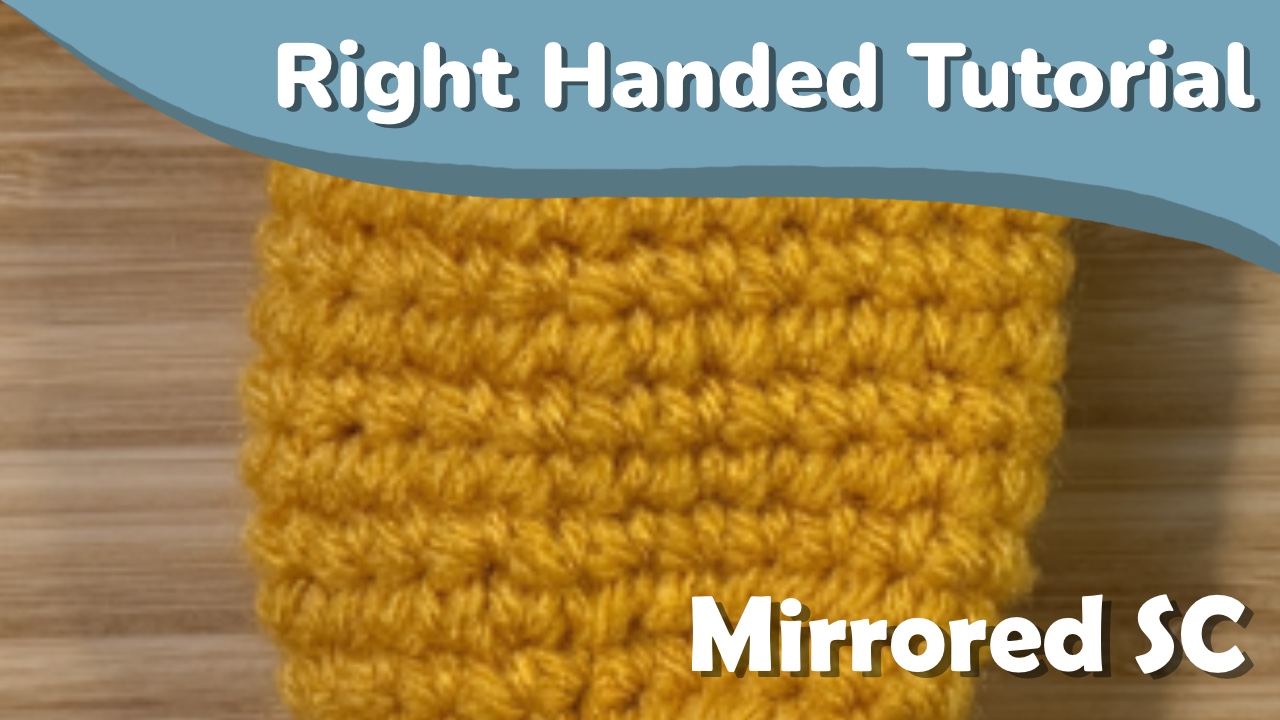
    In this post, we’ll cover how to do a mirrored single crochet. This is a fairly niche technique that allows us to crochet as if we were using our non-dominant hand without learning to crochet left-handed. That said, this can be really awkward to do at first, but is incredibly useful when switching between working in continuous rounds and working in rows to mitigate the texture difference between the two.

    Comparison of mirrored sc and normal sc- on the left mirrored rows and normal rows alternate to keep the fronts of the single crochets on the same side.

    If you’re left handed, check that tutorial out here, and if you prefer a video tutorial, you can find that here.

    Single Crochet

    First I want to look at how a single crochet is worked in a little more depth so that we can ensure that our mirrored stitches are exactly matching how we’d work a normal single crochet.

    When we grab our yarn while working a single crochet, we turn the hook towards us, or towards the front of our work.

    This means that when we work a mirrored stitch, we want to turn the hook away from us.

    Mirroring the stitch

    Since we’re treating this as if it’s being worked with our other hand, we want to go into the next stitch through the back of our work. This will end up being the front of our mirrored stitch.

    We then lay the yarn over the hook, and grab it by turning the hook away from us.

    We pull that loop up to get two loops on our hook.

    We now do the same thing to complete the mirrored stitch. Lay the yarn over the hook, and grab it by turning the hook away. Pull this loop through both loops on your hook.

    That’s how we work a mirrored single crochet! This can be applied to other stitches as well. Pay close attention to how your hook moves while working as you normally would, and mirror it as we’ve done here. If you’re having trouble figuring out the mirrored version of a stitch, what I’ve done is taken a video from the back of my work to watch how the yarn and hook move on the back side. This allows me to see how the back of my work looks as I crochet it, and to copy that as I work facing the back in the mirrored version.


  • FSC Into Existing Piece – Left Handed

    FSC Into Existing Piece – Left Handed

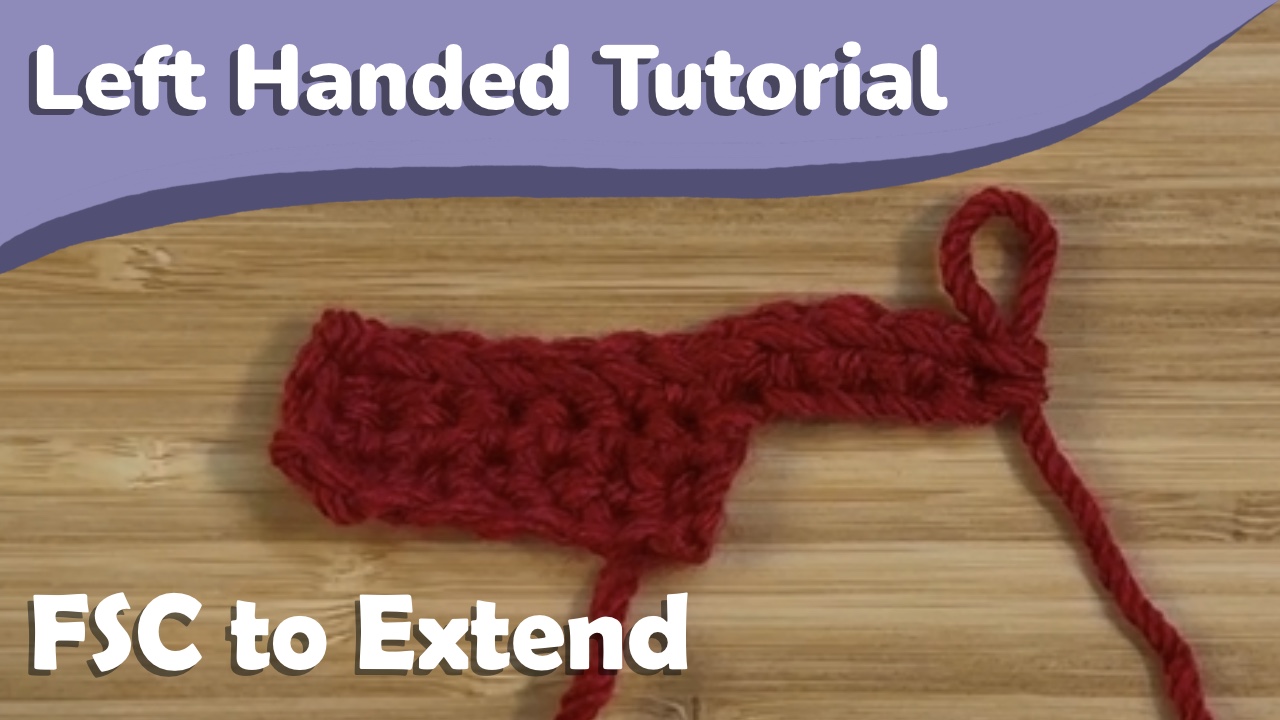
    In this post, we’ll cover how to use a foundation single crochet (fsc) to extend an existing crochet piece. This is great for creating 90° corners on flat pieces, or creating branching in a 3D piece.

    If you aren’t familiar with foundation single crochets, you can find a tutorial for them here.

    If you prefer a video tutorial, you can find that here, and if you’re right handed you can find that tutorial here.

    Working into an existing piece

    The foundation single crochet is worked the same as normal, but the difference is where we begin the stitch. We aren’t working into a chain or into another foundation stitch, since we already have a piece we’re working on.

    To extend a piece with foundation single crochet at the end of a row, you’ll insert your hook back into the last stitch and pull up a loop, as if you’re doing an increase

    Now, you’ll yarn over and pull through just one loop on your hook.

    Then you’ll yarn over and pull through both loops.

    That point where we pull a loop through just one loop on our hook is essentially creating a chain at the bottom of the current row we’re working into. This keeps the fsc’s we’re using to extend this piece in line with the existing row. If we were to chain at the end of this row and work back, we’d be extending on the other side of our row. Using a chain at the start of a row and fsc’s at the end can allow you to make more of a T shape in your piece, with the chain and fsc’s keeping all stitches in line.


  • FSC Into Existing Piece – Right Handed

    FSC Into Existing Piece – Right Handed

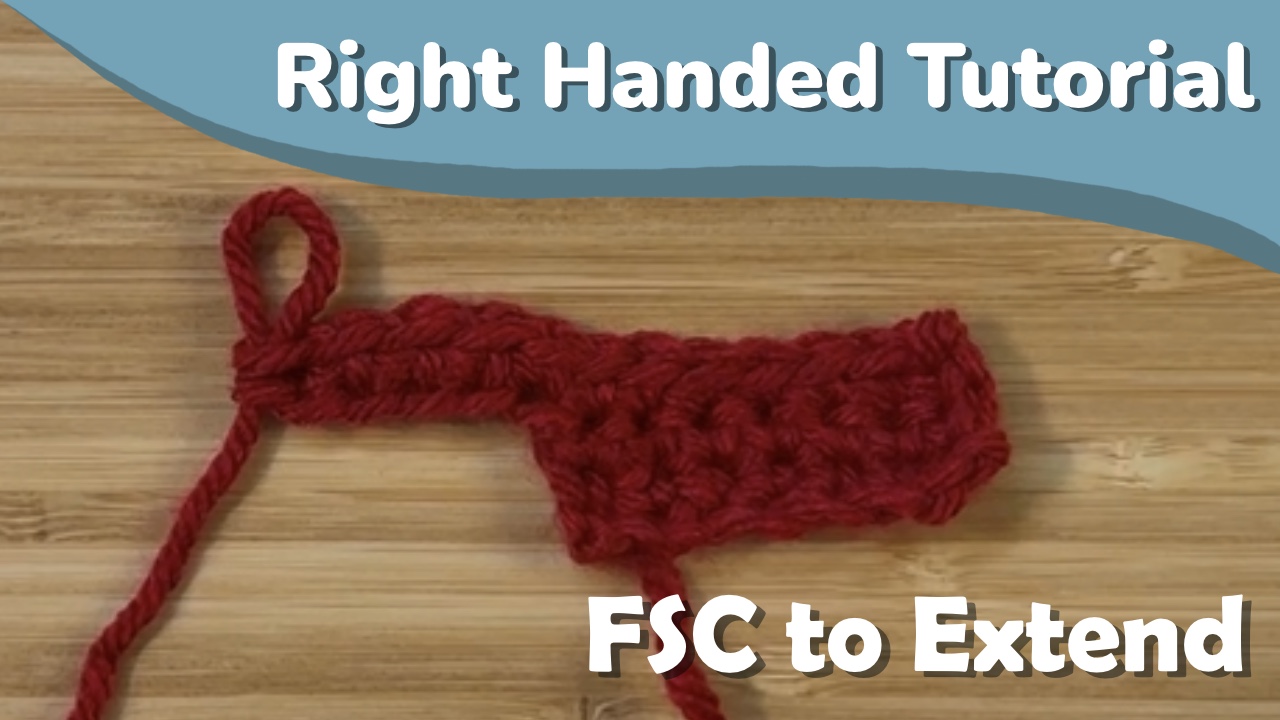
    In this post, we’ll cover how to use a foundation single crochet (fsc) to extend an existing crochet piece. This is great for creating 90° corners on flat pieces, or creating branching in a 3D piece.

    If you aren’t familiar with foundation single crochets, you can find a tutorial for them here.

    If you prefer a video tutorial, you can find that here, and if you’re left handed you can find that tutorial here.

    Working into an existing piece

    The foundation single crochet is worked the same as normal, but the difference is where we begin the stitch. We aren’t working into a chain or into another foundation stitch, since we already have a piece we’re working on.

    To extend a piece with foundation single crochet at the end of a row, you’ll insert your hook back into the last stitch and pull up a loop, as if you’re doing an increase

    Now, you’ll yarn over and pull through just one loop on your hook.

    Then you’ll yarn over and pull through both loops.

    That point where we pull a loop through just one loop on our hook is essentially creating a chain at the bottom of the current row we’re working into. This keeps the fsc’s we’re using to extend this piece in line with the existing row. If we were to chain at the end of this row and work back, we’d be extending on the other side of our row. Using a chain at the start of a row and fsc’s at the end can allow you to make more of a T shape in your piece, with the chain and fsc’s keeping all stitches in line.