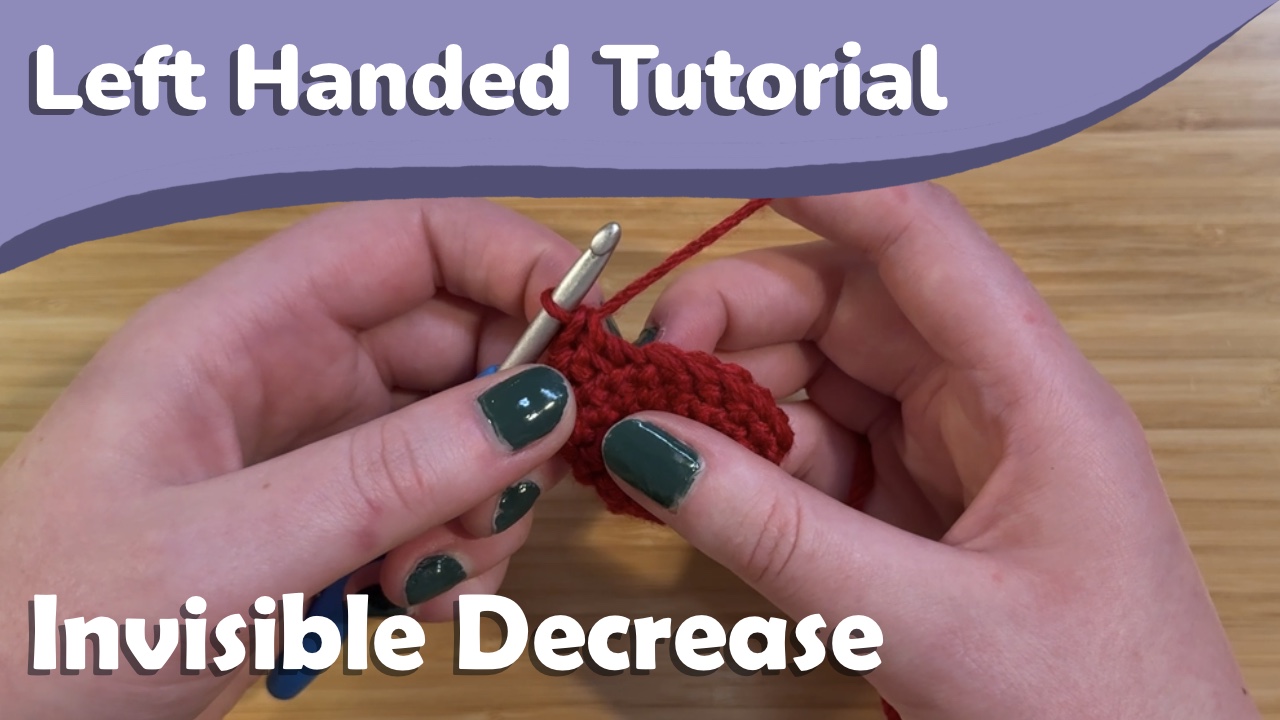
In this post, we’ll cover how to do an invisible decrease. This stitch is often used in amigurumi or other patterns worked in continuous rounds because it creates a stitch that is less visible than a traditional single crochet decrease.
If you’re left handed, you can find that tutorial here, or if you prefer a video tutorial you can find that here.
Working the invisible decrease
This stitch really only works in continuous rounds due to the way the stitches overlap. We’re working into the front stitches of the two stitches we want to decrease into, marked in the image below.
Put your hook through the front loop of the first stitch.
Now put your hook through the front loop of the second stitch.
Your hook is now through the front loops of the two stitches we want to decrease through. We do this by working a single crochet through them both. Yarn over and pull a loop through both of these front loops.
Now, yarn over and pull through both loops on your hook.
And that’s all there is to an invisible decrease! You can also do this with more than just 2 stitches if you need to- I tend to use 3 stitch decreases when I’m making a cube shape.
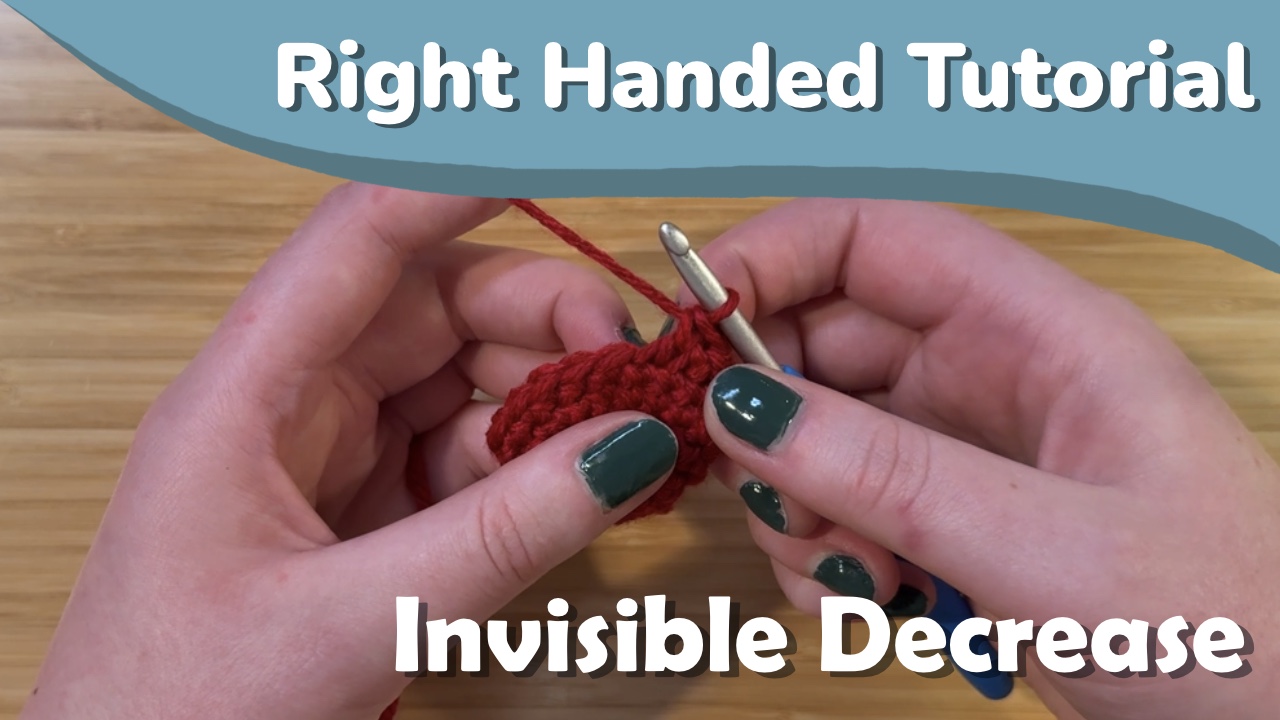
In this post, we’ll cover how to do an invisible decrease. This stitch is often used in amigurumi or other patterns worked in continuous rounds because it creates a stitch that is less visible than a traditional single crochet decrease.
If you’re left handed, you can find that tutorial here, or if you prefer a video tutorial you can find that here.
Working the invisible decrease
This stitch really only works in continuous rounds due to the way the stitches overlap. We’re working into the front stitches of the two stitches we want to decrease into, marked in the image below.
Put your hook through the front loop of the first stitch.
Now put your hook through the front loop of the second stitch.
Your hook is now through the front loops of the two stitches we want to decrease through. We do this by working a single crochet through them both. Yarn over and pull a loop through both of these front loops.
Now, yarn over and pull through both loops on your hook.
And that’s all there is to an invisible decrease! You can also do this with more than just 2 stitches if you need to- I tend to use 3 stitch decreases when I’m making a cube shape.
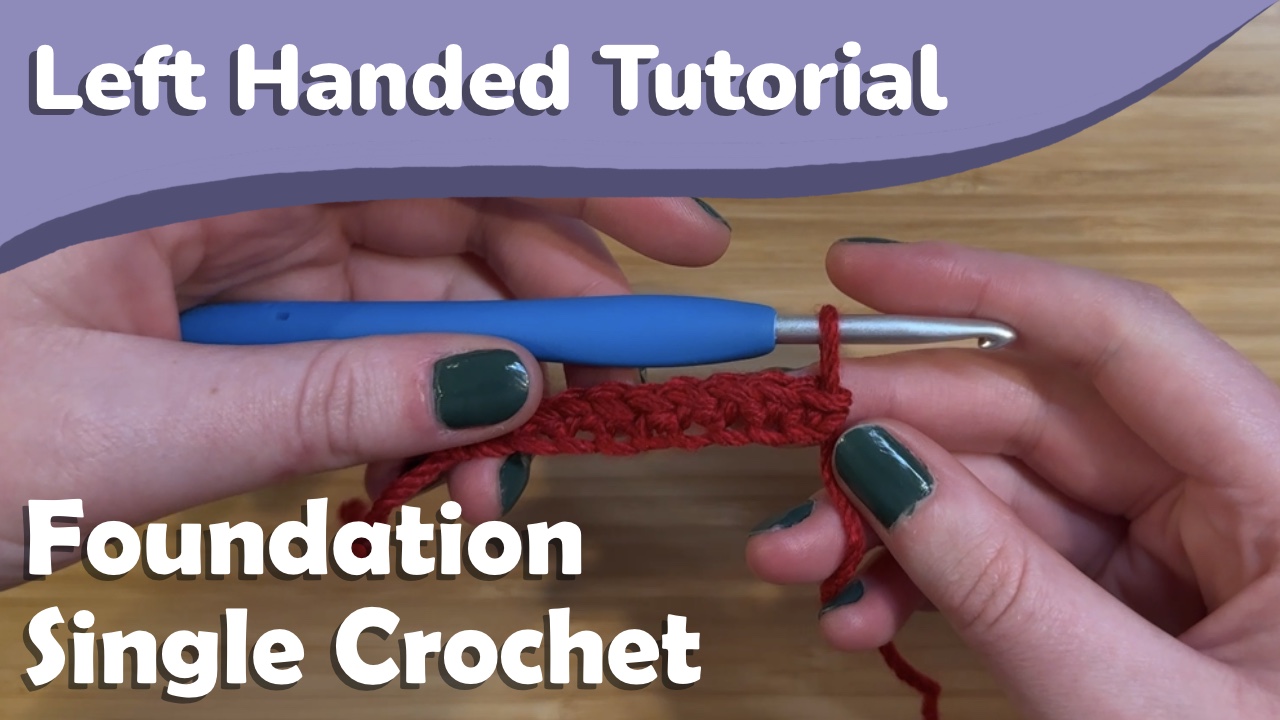
Foundation stitches allow you to make the first row of your crochet work without a starting chain, as well as extend an existing piece (more on that here!). They don’t always work for everything, and they don’t have as clean of an edge as if you were to work in the back bumps of a starting chain, but they’re a great tool to have in your crochet toolbelt.
This post focuses on a foundation single crochet, but at the end we’ll also cover using this technique to do the foundation version of other stitches.
If you prefer a video tutorial, you can find that here, and if you’re right handed you can find that tutorial here.
Working the First Stitch
Start with a slip knot on your hook and chain 2.
Insert your hook into the second chain from your hook, and pull up a loop.
Yarn over, and pull through the first loop on your hook. This step is what allows us to extend our single crochets into a foundation stitch- it sort of turns the loop we pulled up into a chain.
Now, yarn over, and pull through both loops on your hook.
That’s the start of our foundation single crochet!
Working the Next Stitches
The process for working a foundation single crochet is the same as for the first stitch, but we’re going to be working in the bottom of the previous foundation stitch.
Insert your hook into the bottom of the previous foundation single crochet. This is the loop that I mentioned acted as a chain in our first stitch, and is indicated in the image below.
From here on, the steps to work a foundation single crochet are the same as the first stitch. Pull up a loop.
Yarn over, and pull through one loop on your hook.
Yarn over and pull through both loops on your hook.
For Other Stitches
The process for working other stitches in a foundation-like way is the same as for single crochet. Start with a chain of length turning chain + 1, as if you’re working a row of 1 stitch. For double crochet, since it requires a turning chain of 3, this means chaining 4.
You’ll then go into the first chain as if you’re making a row of one stitch. For double crochet, this means yarning over, inserting your hook into that first chain, and pulling up a loop.
You’re then going to yarn over and pull a loop through one loop on your hook. Again, this is creating the “chain” for our foundation stitches. From there you complete your stitch as normal.
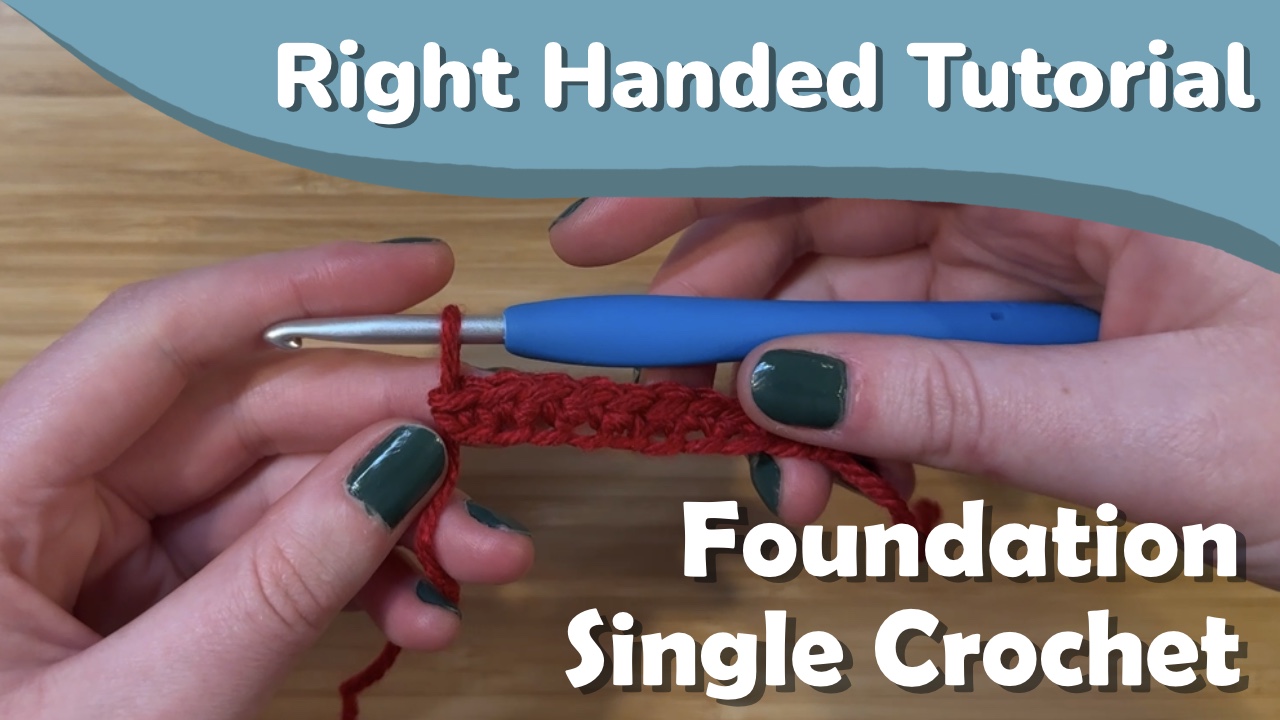
Foundation stitches allow you to make the first row of your crochet work without a starting chain, as well as extend an existing piece (more on that here!). They don’t always work for everything, and they don’t have as clean of an edge as if you were to work in the back bumps of a starting chain, but they’re a great tool to have in your crochet toolbelt.
This post focuses on a foundation single crochet, but at the end we’ll also cover using this technique to do the foundation version of other stitches.
If you prefer a video tutorial, you can find that here, and if you’re left handed you can find that tutorial here.
Working the First Stitch
Start with a slip knot on your hook and chain 2.
Insert your hook into the second chain from your hook, and pull up a loop.
Yarn over, and pull through the first loop on your hook. This step is what allows us to extend our single crochets into a foundation stitch- it sort of turns the loop we pulled up into a chain.
Now, yarn over, and pull through both loops on your hook.
That’s the start of our foundation single crochet!
Working the Next Stitches
The process for working a foundation single crochet is the same as for the first stitch, but we’re going to be working in the bottom of the previous foundation stitch.
Insert your hook into the bottom of the previous foundation single crochet. This is the loop that I mentioned acted as a chain in our first stitch, and is indicated in the image below.
From here on, the steps to work a foundation single crochet are the same as the first stitch. Pull up a loop.
Yarn over, and pull through one loop on your hook.
Yarn over and pull through both loops on your hook.
For Other Stitches
The process for working other stitches in a foundation-like way is the same as for single crochet. Start with a chain of length turning chain + 1, as if you’re working a row of 1 stitch. For double crochet, since it requires a turning chain of 3, this means chaining 4.
You’ll then go into the first chain as if you’re making a row of one stitch. For double crochet, this means yarning over, inserting your hook into that first chain, and pulling up a loop.
You’re then going to yarn over and pull a loop through one loop on your hook. Again, this is creating the “chain” for our foundation stitches. From there you complete your stitch as normal.
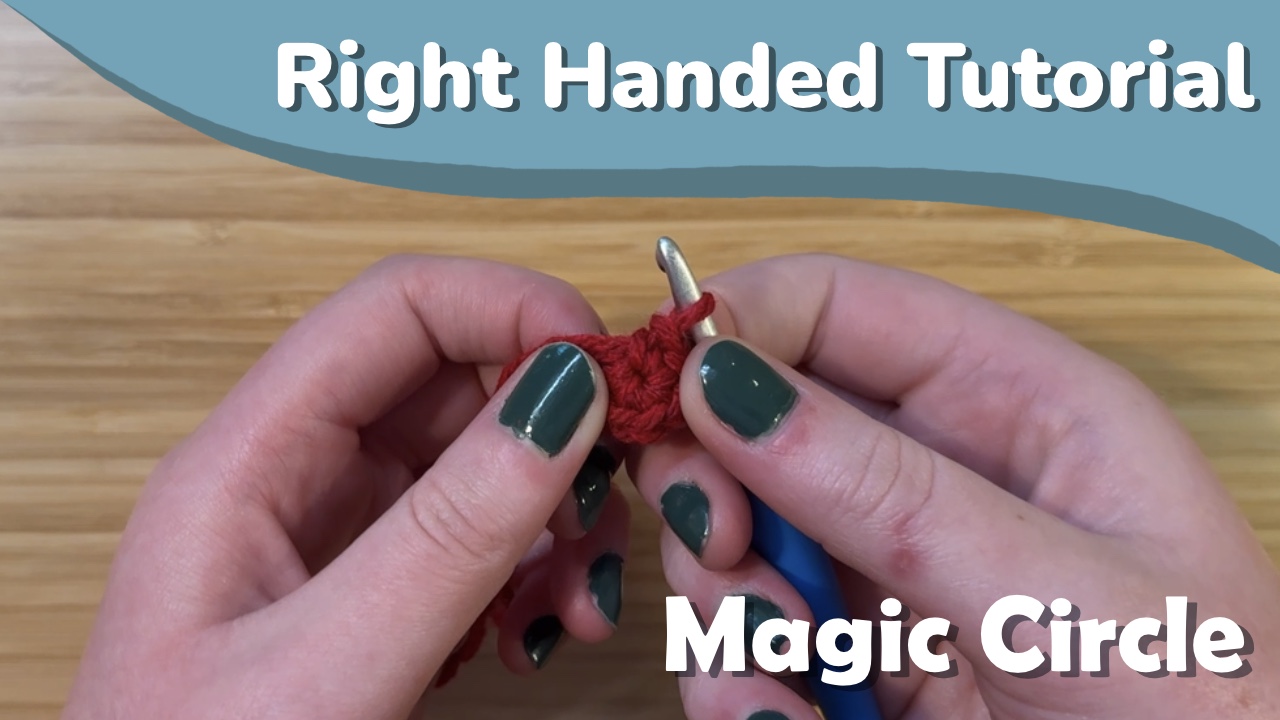
In this post, we’ll cover how to make a magic circle. If you prefer a video tutorial, you can find that here, and if you’re right handed you can find that tutorial here.
Magic circles are most often used in amigurumi because they eliminate the gap at the center of the starting circle, but they can also be used for anything worked in the round where you want to mitigate gapping.
Making the Magic Circle
There are a few different ways to start your magic circle, but I prefer wrapping the yarn around my fingers since it helps to keep the yarn strands in place.
Start by placing the yarn tail over the palm of your right hand.
Now, wrap the yarn around the back of your hand and under your index and middle finger.
Cross the yarn over, angling it towards your wrist. Catch this yarn under your index and ring fingers again.
The yarn strands should be parallel on the back of your hand.
Now, using your hook, go under the strand closest to your fingertips, and over the strand closest to your wrist.
Grab this second strand, and pull it under the first.
Turning the mouth of your hook towards you, twist this strand around your hook so it loops on itself.
You’re now going to grab and chain one with your working yarn. This strand is indicated on the image above- it’s the part of the second strand towards the top of your hand.
Using your hook, go under this working yarn to grab it, and pull it through the twisted loop on your hook.
That chain one secures our magic loop, and we can now take it off our fingers.
Working into the Magic Circle
We’ll use single crochet in this example. You’ll already have a chain one from making the circle, so we don’t have to chain more to get to stitch height.
Start by opening the circle with your fingers. You’re going to be working both into the loop and around the yarn tail. Working around the yarn tail is what lets us close the loop at the end.
Again, you’re working into the loop and around the yarn tail, so make sure your hook goes under both of these strands.
You can now work your single crochets around these two strands.
If you’re working other stitches into the magic circle, just make sure you chain the correct number, keeping in mind that we already have a chain one to start. If you’re working double crochets in the magic circle, you’re going to want to chain two more to get up to a turning chain of 3 before working into the magic circle.
If your yarn tail is starting to get too short to work around, just pull on it a little bit. This will lengthen the tail, but also begin to close the loop, so don’t pull on it too much.
Closing the magic circle
Once you’ve worked the number of stitches you need into the magic circle, grab the yarn tail, and pull it tight.
And that’s it!
As you can see above, there’s no gap in the center of this round of stitches.
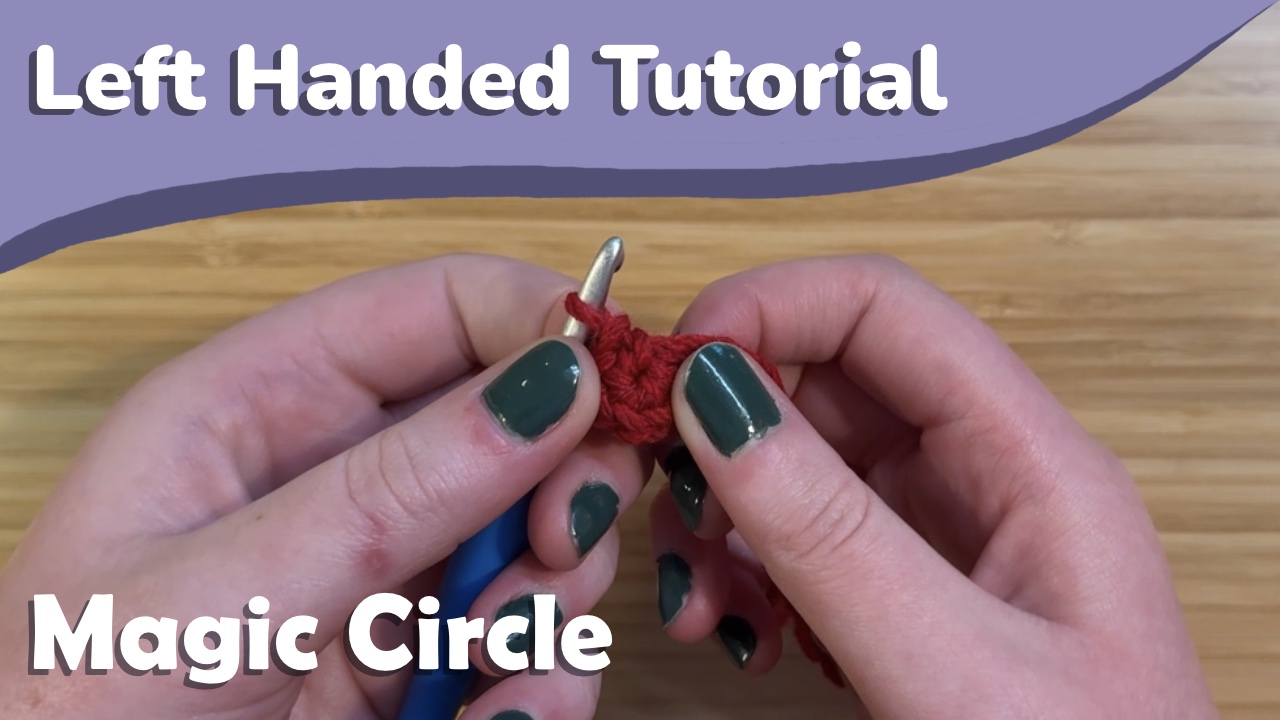
In this post, we’ll cover how to make a magic circle. If you prefer a video tutorial, you can find that here, and if you’re left handed you can find that tutorial here.
Magic circles are most often used in amigurumi because they eliminate the gap at the center of the starting circle, but they can also be used for anything worked in the round where you want to mitigate gapping.
Making the Magic Circle
There are a few different ways to start your magic circle, but I prefer wrapping the yarn around my fingers since it helps to keep the yarn strands in place.
Start by placing the yarn tail over the palm of your left hand.
Now, wrap the yarn around the back of your hand and under your index and middle finger.
Cross the yarn over, angling it towards your wrist. Catch this yarn under your index and ring fingers again.
The yarn strands should be parallel on the back of your hand.
Now, using your hook, go under the strand closest to your fingertips, and over the strand closest to your wrist.
Grab this second strand, and pull it under the first.
Turning the mouth of your hook towards you, twist this strand around your hook so it loops on itself.
You’re now going to grab and chain one with your working yarn. This strand is indicated on the image above- it’s the part of the second strand towards the top of your hand.
Using your hook, go under this working yarn to grab it, and pull it through the twisted loop on your hook.
That chain one secures our magic loop, and we can now take it off our fingers.
Working into the Magic Circle
We’ll use single crochet in this example. You’ll already have a chain one from making the circle, so we don’t have to chain more to get to stitch height.
Start by opening the circle with your fingers. You’re going to be working both into the loop and around the yarn tail. Working around the yarn tail is what lets us close the loop at the end.
Again, you’re working into the loop and around the yarn tail, so make sure your hook goes under both of these strands.
You can now work your single crochets around these two strands.
If you’re working other stitches into the magic circle, just make sure you chain the correct number, keeping in mind that we already have a chain one to start. If you’re working double crochets in the magic circle, you’re going to want to chain two more to get up to a turning chain of 3 before working into the magic circle.
If your yarn tail is starting to get too short to work around, just pull on it a little bit. This will lengthen the tail, but also begin to close the loop, so don’t pull on it too much.
Closing the magic circle
Once you’ve worked the number of stitches you need into the magic circle, grab the yarn tail, and pull it tight.
And that’s it!
As you can see above, there’s no gap in the center of this round of stitches.
If you’ve made it here, that means you’ve (probably) finished the Crochetsics Basics course! Congratulations!
I hope this course was useful in getting you started with crochet and you can now hit the ground running with future patterns you come across. We obviously didn’t cover everything possible with crochet, since that’s impossible, but if you’re looking for next steps I’d suggest looking into color changes and stitch patterns, like moss stitch, griddle stitch, or suzette stitch. Or just go find a pattern you like and look up tutorials for things you don’t know! The best way to learn in crochet (or in general) is through practice, and it helps if it’s practice on a project you’re excited about.
I’ll be continuing posting patterns, tutorials, and techniques on this site (and on my YouTube channel!), so if you have any interest in amigurumi or tapestry crochet, consider looking around here! Those are some of my favorite parts of crochet and I personally find them super fun.
If you found this series helpful to you, consider buying me a coffee over on my Ko-Fi! You don’t have to do this, but it helps me keep working on stuff like this, and helps keep the website up.
Thanks so much for going on this journey with me, and enjoy your future crochet adventures!
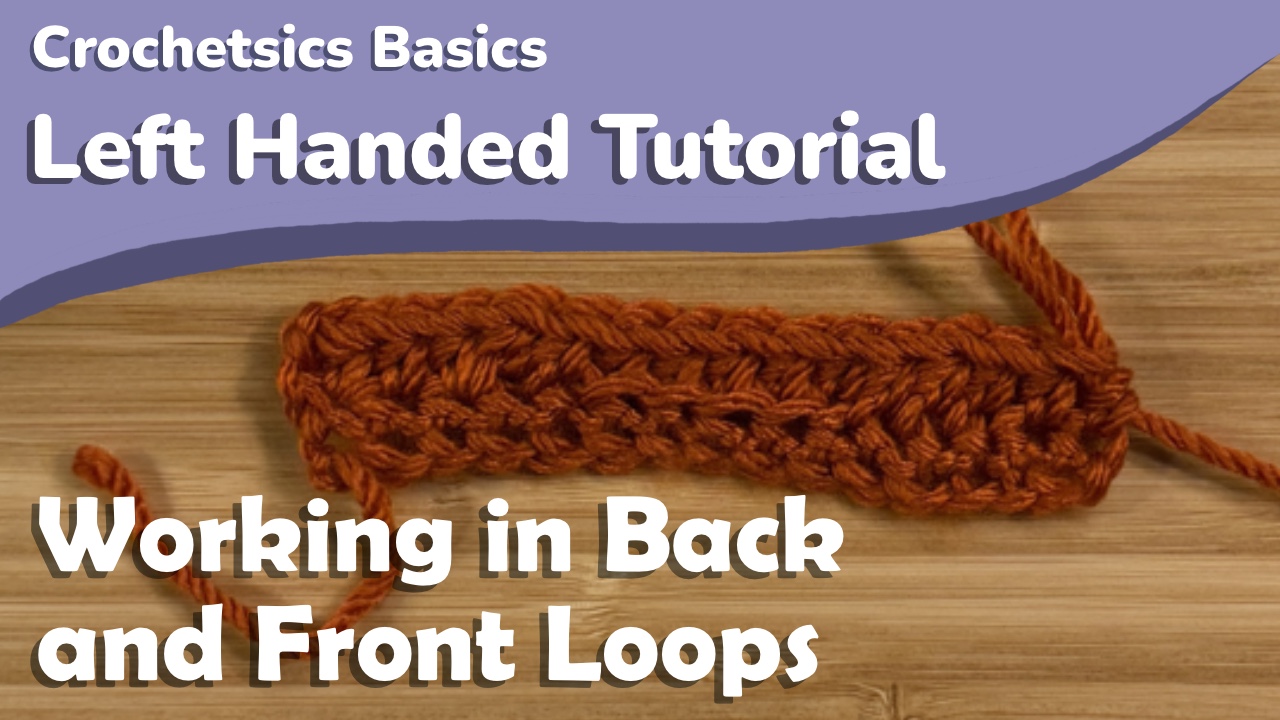
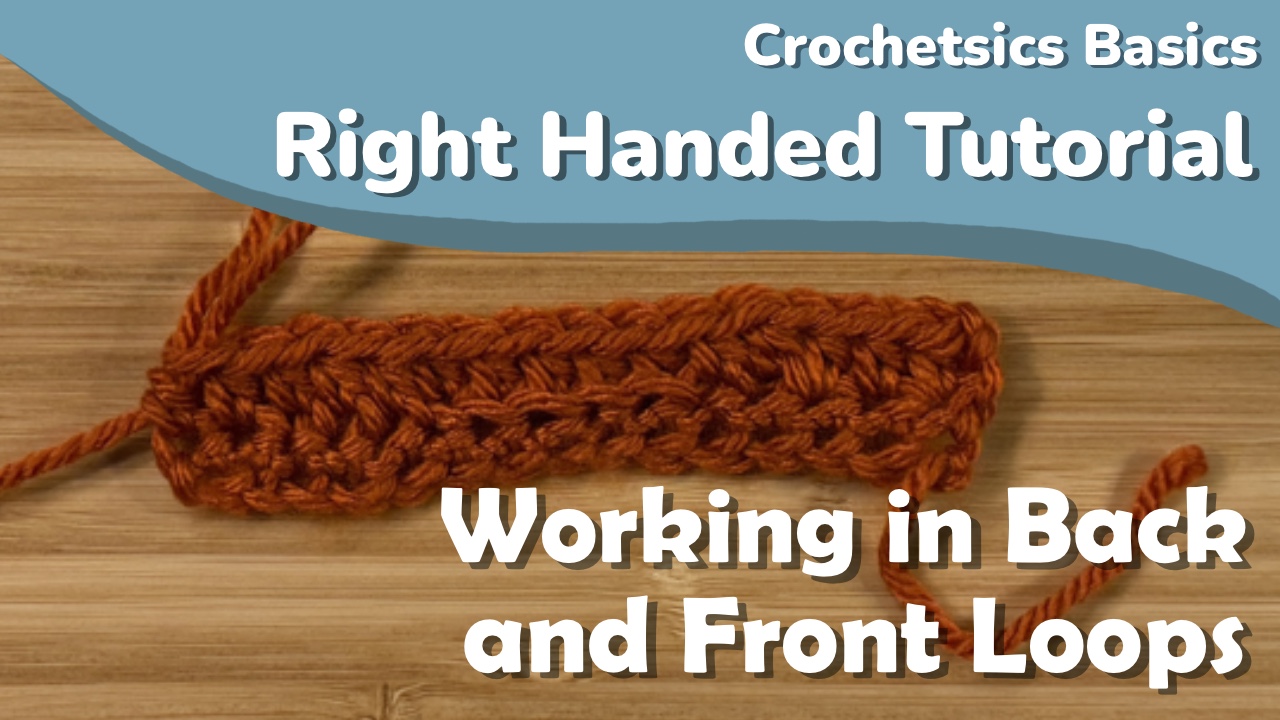
Every stitch so far we’ve worked under both loops of the stitch we’re working into. For the most part, this is how crochet stitches are worked. Sometimes, however, you’ll be asked to work into only one of these loops, noted as BLO (back loop only) or FLO (front loop only).
If you’re right-handed, check that tutorial out here, or if you prefer a video tutorial check that out here.
Here’s an image with the front and back loops of a stitch annotated and held as you’d be starting to work across the row:
Which loop is the “back” versus the “front” depends on which loop is closest to you. The front loop is the closest loop, and the back loop is the furthest loop. If your stitches are facing the other way (for example, in continuous rounds), the front and back loops look like this:
You can see that the front and back loops are in the same location, but the stitch itself is flipped.
This tutorial will use single crochets as an example stitch.
Working in Back Loops
The shorthand for working in the back loops in a written pattern is BLO.
The chart symbol for working in the back loops is
This symbol will be at the bottom of the stitch to be worked in the back loops of the previous row.
To work into just the back loop, insert your hook through the middle of the top of the stitch.
You’ll push through the stitch so that the only part overlapping your hook is that one piece of yarn- the back loop
You can now complete your stitch as normal!
Working in Front Loops
The shorthand for working in the front loops in a written pattern is FLO.
The chart symbol for working in the front loops is
This symbol will be at the bottom of the stitch to be worked in the front loops of the previous row.
To work into just the front loop, your hook will start in the same place as it would when you work a stitch normally.
Instead of going under both loops, tilt your hook upwards to catch just that first loop on your hook and go between the loops.
Now you can complete your stitch as normal!
Final notes
These are the last techniques used in the second cinch sack pattern! There are some tips or replacements in that pattern if you’re struggling with the cluster stitches, but other than that you now know everything you need to make it! I’ll see you in the next post for the finale 🙂
Every stitch so far we’ve worked under both loops of the stitch we’re working into. For the most part, this is how crochet stitches are worked. Sometimes, however, you’ll be asked to work into only one of these loops, noted as BLO (back loop only) or FLO (front loop only).
If you’re left-handed, check that tutorial out here, or if you prefer a video tutorial check that out here.
Here’s an image with the front and back loops of a stitch annotated and held as you’d be starting to work across the row:
Which loop is the “back” versus the “front” depends on which loop is closest to you. The front loop is the closest loop, and the back loop is the furthest loop. If your stitches are facing the other way (for example, in continuous rounds), the front and back loops look like this:
You can see that the front and back loops are in the same location, but the stitch itself is flipped.
This tutorial will use single crochets as an example stitch.
Working in Back Loops
The shorthand for working in the back loops in a written pattern is BLO.
The chart symbol for working in the back loops is
This symbol will be at the bottom of the stitch to be worked in the back loops of the previous row.
To work into just the back loop, insert your hook through the middle of the top of the stitch.
You’ll push through the stitch so that the only part overlapping your hook is that one piece of yarn- the back loop
You can now complete your stitch as normal!
Working in Front Loops
The shorthand for working in the front loops in a written pattern is FLO.
The chart symbol for working in the front loops is
This symbol will be at the bottom of the stitch to be worked in the front loops of the previous row.
To work into just the front loop, your hook will start in the same place as it would when you work a stitch normally.
Instead of going under both loops, tilt your hook upwards to catch just that first loop on your hook and go between the loops.
Now you can complete your stitch as normal!
Final notes
These are the last techniques used in the second cinch sack pattern! There are some tips or replacements in that pattern if you’re struggling with the cluster stitches, but other than that you now know everything you need to make it! I’ll see you in the next post for the finale 🙂
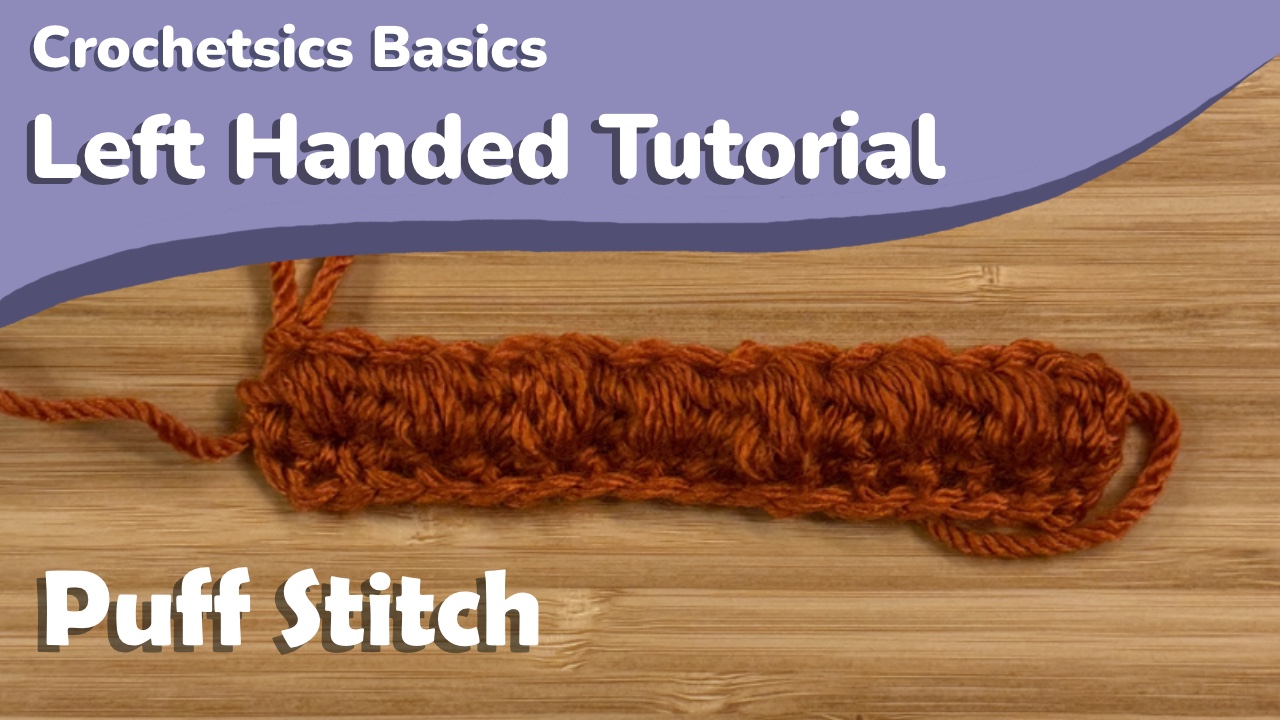
In this post, we’ll cover how to do the puff stitch. If you’ve ever seen a textured crochet afghan, this was likely one of the stitches used to make those little bumps.
This isn’t the only texture creating stitch like this- there’s also the bobble and popcorn stitch- but if you’re following the Crochetsics Basics course, this is the one we use in the second cinch sack.
If you’re right-handed, check that tutorial out here, or if you prefer a video tutorial check that out here.
Puff stitch
Puff stitches are a number of incomplete half double crochets, usually 3 to 5 from what I’ve seen. This example will use 3 half double crochets.
Here’s what the puff stitch looks like:
Stitch Instructions
The shorthand for puff stitches in a written pattern is puff.
The chart symbol for puff stitches is
We’ll start by yarning over and inserting our hook into the next stitch to pull up a loop.
You’ll now have three loops on your hook. We’ll now repeat that process two more times. Yarn over, insert your hook into the same stitch and pull up a loop
You’ll now have five loops on your hook. One more time: yarn over, insert your hook into the same stitch and pull up a loop
You should now have seven loops on your hook. Yarn over, and pull that loop through all the loops on your hook.
You’ve completed a puff stitch!
This stitch is also worked from the wrong side of your work, meaning that the front of the puff stitch is on the side opposite you when you stitch it. The side opposite you is the side that protrudes more from the crocheted fabric.
Below you can see a comparison between the front and back of some puff stitches.
Tips/common issues
The biggest issue with these stitches is being able to keep hold of your final loop while pulling it through every other stitch on your hook. It truly does just take practice and time, and making sure your tension isn’t so tight you can’t pull your hook through, or so loose you lose the loop you’re trying to pull through.
If you’re following along with the Crochetsics course and making the projects that go along with it, there is an alternative in the second pattern if you find yourself struggling with this stitch and want an alternative.
Used to monitor number of Google Analytics server requests when using Google Tag Manager
1 minute
_gid
ID used to identify users for 24 hours after last activity
24 hours
_gac_
Contains information related to marketing campaigns of the user. These are shared with Google AdWords / Google Ads when the Google Ads and Google Analytics accounts are linked together.
90 days
_gali
Used by Google Analytics to determine which links on a page are being clicked
30 seconds
_ga
ID used to identify users
2 years
__utmx
Used to determine whether a user is included in an A / B or Multivariate test.
18 months
__utmv
Contains custom information set by the web developer via the _setCustomVar method in Google Analytics. This cookie is updated every time new data is sent to the Google Analytics server.
2 years after last activity
__utmz
Contains information about the traffic source or campaign that directed user to the website. The cookie is set when the GA.js javascript is loaded and updated when data is sent to the Google Anaytics server
6 months after last activity
__utmc
Used only with old Urchin versions of Google Analytics and not with GA.js. Was used to distinguish between new sessions and visits at the end of a session.
End of session (browser)
__utmb
Used to distinguish new sessions and visits. This cookie is set when the GA.js javascript library is loaded and there is no existing __utmb cookie. The cookie is updated every time data is sent to the Google Analytics server.
30 minutes after last activity
__utmt
Used to monitor number of Google Analytics server requests
10 minutes
__utma
ID used to identify users and sessions
2 years after last activity
SourceBuster is used by WooCommerce for order attribution based on user source.
Name
Description
Duration
sbjs_migrations
Technical data to help with migrations between different versions of the tracking feature
session
sbjs_current_add
Timestamp, referring URL, and entry page for your visitor’s current visit to your store
session
sbjs_first_add
Timestamp, referring URL, and entry page for your visitor’s first visit to your store (only applicable if the visitor returns before the session expires)
session
sbjs_current
Traffic origin information for the visitor’s current visit to your store
session
sbjs_first
Traffic origin information for the visitor’s first visit to your store (only applicable if the visitor returns before the session expires)
session
sbjs_udata
Information about the visitor’s user agent, such as IP, the browser, and the device type
session
sbjs_session
The number of page views in this session and the current page path