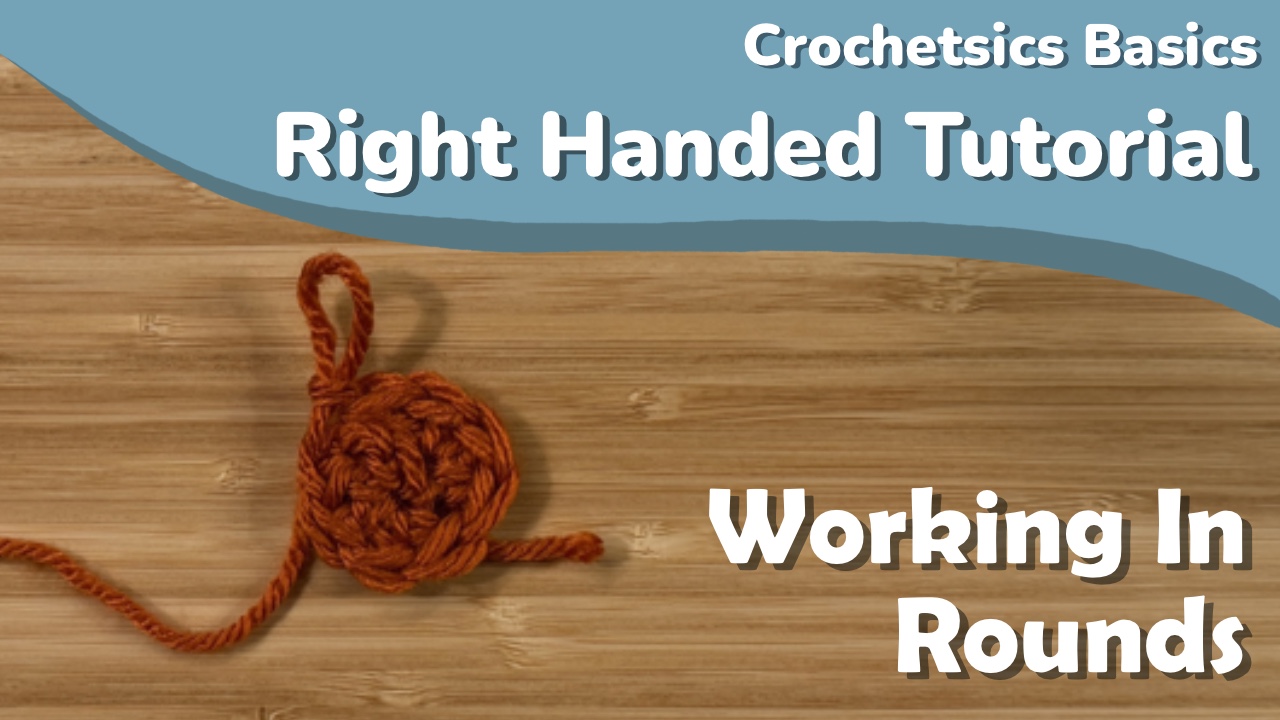
In the Crochetsics Basics course so far we’ve been working in rows, but many projects (including the second cinch sack) are worked in rounds. There are a few different ways to make your first round, as well as a few ways to work in rounds once you’ve started. For the sake of this course, we’ll only cover what’s needed for the second cinch sack pattern, just to keep things simple.
If you’re left-handed, check that tutorial out here, or if you prefer a video tutorial check that out here.
Starting rounds
One way to start your rounds is by making a chain and working into the first chain. This is likely the easiest and most intuitive for beginners as well.
Start by chaining the length of your turning chain for your stitch plus one. For double crochet, our turning chain is three, so we’ll chain four.

Now, we’ll work as many stitches as we need into the first chain. Usually you’re working enough stitches into this starting chain that you may need to rotate your work and work into the other side of the chain:

Working rounds
So you’ve got your first round done and now need to start the second. Every pattern is different, but there’s two main methods: continuous or concentric rounds. Here, we’ll cover continuous rounds and concentric turned rounds (often just called turned rounds).
Continuous rounds
Continuous rounds create a spiral look. From our double crochet example, the way we would continue would be to stitch directly into our first stitch, which you can see below:


With continuous rounds, there’s no clear start and end to your round, so stitch markers are a must. I tend to mark the final stitch of a round with my markers.
This also creates a spiral look, which is a bit easier to see in the bottom of the cinch sack below, worked in single crochet:

Concentric turned rounds
Concentric rounds work much like rows in that there’s always a turning chain to get back up to height. They also use a slip stitch to connect the start and end of rounds.
When you get to the end of your round while working in turned rounds, you’ll slip stitch to the first stitch of the round to close it.

Then, you’ll make your turning chain just like you would when working in rows. For this double crochet example, we’d chain 3 and turn our work since we’re working in turned rounds.

You’re then going to work back along your circle, the same as you would for working in rows. The first stitch of the round is marked in the image below.


Again, there are a few other ways to start or work in rounds with crochet, but those are the ways we need for the second cinch sack. If you’re following a pattern, it should tell you the way to start and the way to work your rounds (i.e. continuous spiral rounds).
Next up is increasing and decreasing, which are essential when working in rounds!
Previous: Pattern Reading