Tag: double crochet increase

  • Increasing and Decreasing – Left Handed

    Increasing and Decreasing – Left Handed

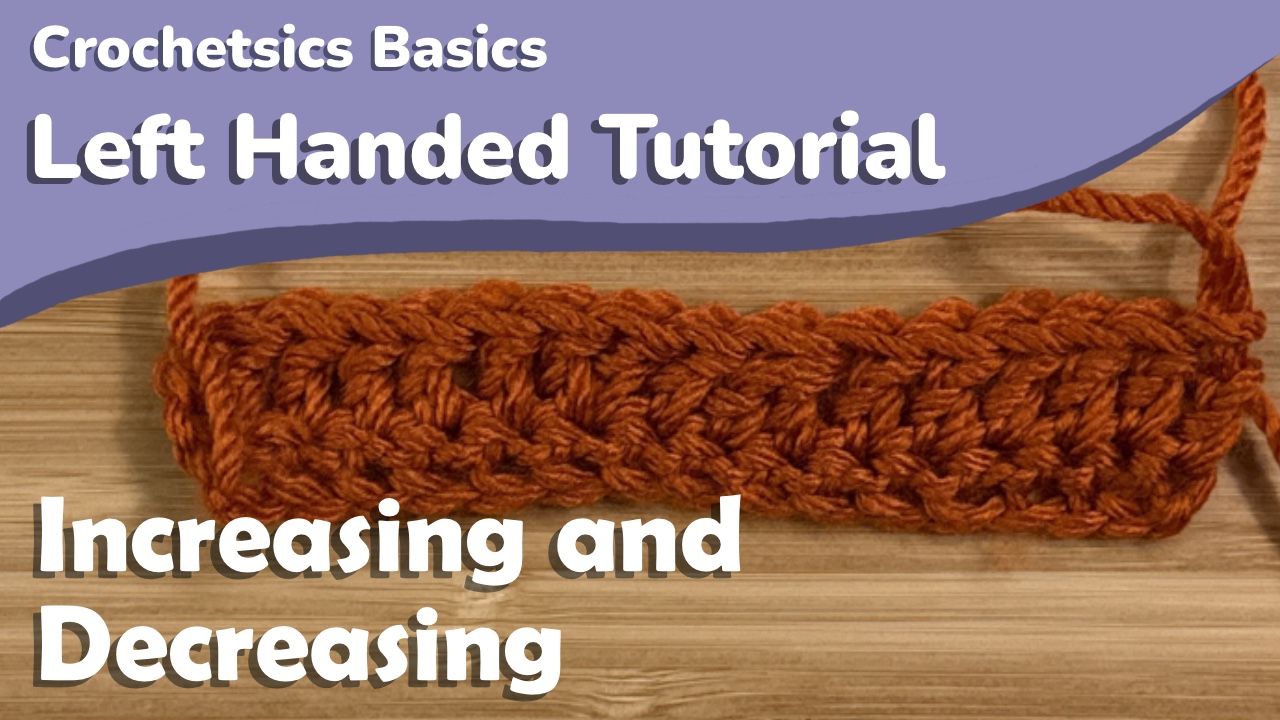
    Here we’ll cover how to increase and decrease in crochet. Increasing is relatively simple, just putting two stitches in the same stitch, while decreasing is a bit more difficult since you leave a stitch unfinished, start a stitch in the next stitch, then finish the two stitches at the same time. We’ll cover each of these in more detail below.

    If you’re right-handed, check that tutorial out here, or if you prefer a video tutorial check that out here.

    Increasing

    Increasing is the same regardless of stitch- you’ll just place another stitch in the same stitch you just worked into. The example below uses single crochets, but the same thing works for half double, double, or treble crochets.

    Single Crochet Increase

    The shorthand for a single crochet increase in a written pattern is sc inc.

    The chart symbol for single crochet increases is

    First, make a single crochet stitch in the next stitch

    Now, insert your hook into the stitch you just worked into.

    Do a single crochet into this stitch.

    In the image above you can see that there are now two stitches in the same gap!

    Some patterns might require you to increase more than this, which may be notated as sc 3 inc, or something similar.

    Double Crochet Increase

    The shorthand for a double crochet increase in a written pattern is dc inc.

    The chart symbol for double crochet increases is

    A double crochet increase works the exact same way as a single crochet increase. Do a double crochet into the next stitch.

    Now, yarn over and insert your hook back into the stitch you just worked into.

    Complete a double crochet in this stitch.

    It’s a little easier here to see the two double crochets in the same stitch than two single crochets.

    Decreasing

    Decreases are a little trickier, so we’ll go over a single and double crochet decrease as examples. All decrease types work mostly the same!

    Single crochet decrease

    The shorthand for a single crochet decrease in a written pattern is sc dec or sc2tog.

    The chart symbol for single crochet decreases is

    To do a single crochet decrease, insert your hook into the next stitch and pull up a loop.

    You aren’t going to finish your stitch here. Insert your hook into the next stitch and pull up another loop.

    Now you should have three loops on your hook. Yarn over, and pull that loop through all three loops on your hook.

    It’s a little difficult to see, but there are two v’s for the front of each single crochet, but they meet under a single v at the top of the stitch. If you look at what the double crochet decrease looks like, it’s a bit clearer to see the two stitches coming under the single v at the top.

    Double crochet decrease

    The shorthand for a double crochet decrease in a written pattern is dc dec or dc2tog.

    The chart symbol for double crochet decreases is

    Other stitch decreases work similarly- you’ll work all of a stitch except for the final loop, then work another stitch in the next stitch. You’ll do the last yarn over and pull through for both of these stitches at the same time. We’ll see an example of this with double crochet. Start by yarning over, inserting your hook in the next stitch, and pulling up a loop.

    Now, yarn over, and pull through two loops. You’ll have two loops left on your hook.

    If we were to yarn over and pull through now, we’d have completed a double crochet. Since we want to decrease, we’ll leave these loops on our hook, and start another double crochet. Yarn over, insert your hook into the next stitch, and pull up a loop. You’ll have 4 loops on your hook at this point

    Now, yarn over and pull through the first two loops on your hook.

    You’ll have 3 loops on your hook at this point, with two unfinished double crochets. Yarn over, and pull through all three loops.

    You’ve finished a double crochet decrease!

    Generally, any decrease is going to be a process of doing all but the final yarn over of a stitch, then starting the next stitch, and using the final yarn over of that one to complete both stitches.

    >2 stitch decreases

    You can also decrease more than one stitch if it calls for it- it might be written something like 3 sc dec, or sc3tog, which means you’re going to have three incomplete single crochets on your hook before doing that last yarn over and pull through. This turns 3 stitches into 1.

    Next up is the puff stitch which is like a combination of increasing and decreasing to create texture in a project.


  • Increasing and Decreasing – Right Handed

    Increasing and Decreasing – Right Handed

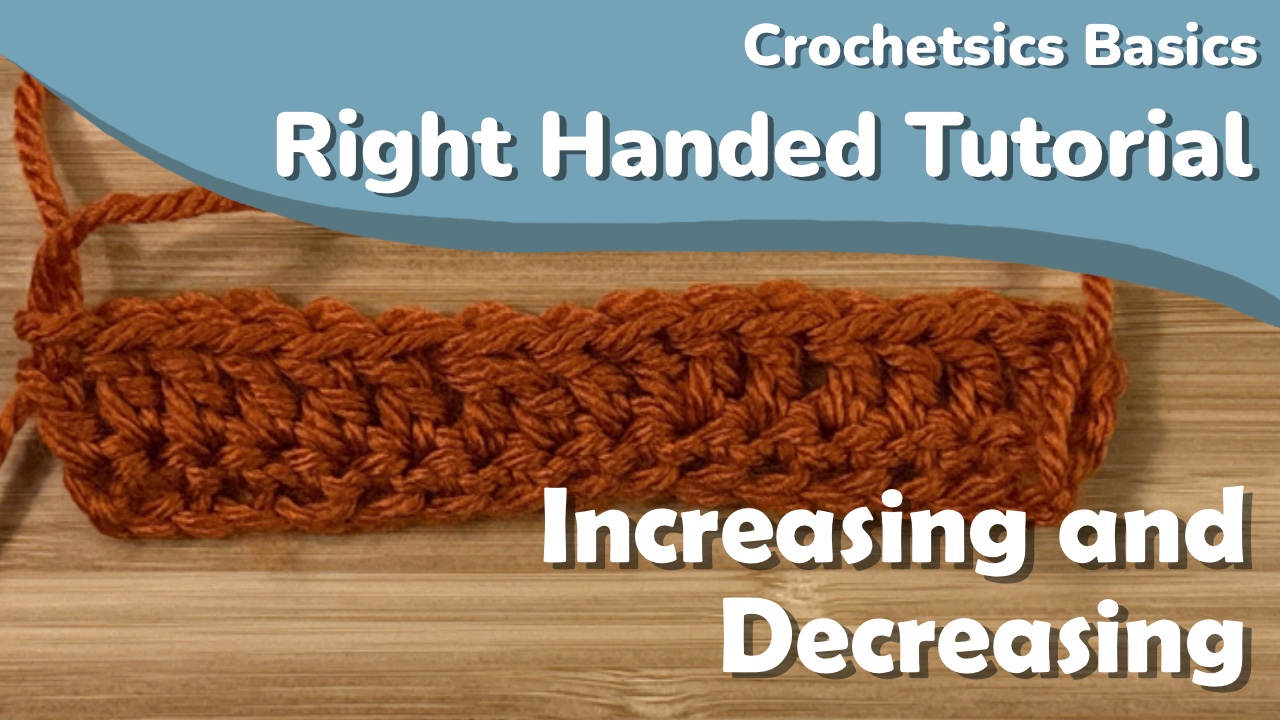
    Here we’ll cover how to increase and decrease in crochet. Increasing is relatively simple, just putting two stitches in the same stitch, while decreasing is a bit more difficult since you leave a stitch unfinished, start a stitch in the next stitch, then finish the two stitches at the same time. We’ll cover each of these in more detail below.

    If you’re left-handed, check that tutorial out here, or if you prefer a video tutorial check that out here.

    Increasing

    Increasing is the same regardless of stitch- you’ll just place another stitch in the same stitch you just worked into. The example below uses single crochets, but the same thing works for half double, double, or treble crochets.

    Single Crochet Increase

    The shorthand for a single crochet increase in a written pattern is sc inc.

    The chart symbol for single crochet increases is

    First, make a single crochet stitch in the next stitch

    Now, insert your hook into the stitch you just worked into.

    Do a single crochet into this stitch.

    In the image above you can see that there are now two stitches in the same gap!

    Some patterns might require you to increase more than this, which may be notated as sc 3 inc, or something similar.

    Double Crochet Increase

    The shorthand for a double crochet increase in a written pattern is dc inc.

    The chart symbol for double crochet increases is

    A double crochet increase works the exact same way as a single crochet increase. Do a double crochet into the next stitch.

    Now, yarn over and insert your hook back into the stitch you just worked into.

    Complete a double crochet in this stitch.

    It’s a little easier here to see the two double crochets in the same stitch than two single crochets.

    Decreasing

    Decreases are a little trickier, so we’ll go over a single and double crochet decrease as examples. All decrease types work mostly the same!

    Single crochet decrease

    The shorthand for a single crochet decrease in a written pattern is sc dec or sc2tog.

    The chart symbol for single crochet decreases is

    To do a single crochet decrease, insert your hook into the next stitch and pull up a loop.

    You aren’t going to finish your stitch here. Insert your hook into the next stitch and pull up another loop.

    Now you should have three loops on your hook. Yarn over, and pull that loop through all three loops on your hook.

    It’s a little difficult to see, but there are two v’s for the front of each single crochet, but they meet under a single v at the top of the stitch. If you look at what the double crochet decrease looks like, it’s a bit clearer to see the two stitches coming under the single v at the top.

    Double crochet decrease

    The shorthand for a double crochet decrease in a written pattern is dc dec or dc2tog.

    The chart symbol for double crochet decreases is

    Other stitch decreases work similarly- you’ll work all of a stitch except for the final loop, then work another stitch in the next stitch. You’ll do the last yarn over and pull through for both of these stitches at the same time. We’ll see an example of this with double crochet. Start by yarning over, inserting your hook in the next stitch, and pulling up a loop.

    Now, yarn over, and pull through two loops. You’ll have two loops left on your hook.

    If we were to yarn over and pull through now, we’d have completed a double crochet. Since we want to decrease, we’ll leave these loops on our hook, and start another double crochet. Yarn over, insert your hook into the next stitch, and pull up a loop. You’ll have 4 loops on your hook at this point

    Now, yarn over and pull through the first two loops on your hook.

    You’ll have 3 loops on your hook at this point, with two unfinished double crochets. Yarn over, and pull through all three loops.

    You’ve finished a double crochet decrease!

    Generally, any decrease is going to be a process of doing all but the final yarn over of a stitch, then starting the next stitch, and using the final yarn over of that one to complete both stitches.

    >2 stitch decreases

    You can also decrease more than one stitch if it calls for it- it might be written something like 3 sc dec, or sc3tog, which means you’re going to have three incomplete single crochets on your hook before doing that last yarn over and pull through. This turns 3 stitches into 1.

    Next up is the puff stitch which is like a combination of increasing and decreasing to create texture in a project.