Tag: foundation single crochet

  • FSC Into Existing Piece – Left Handed

    FSC Into Existing Piece – Left Handed

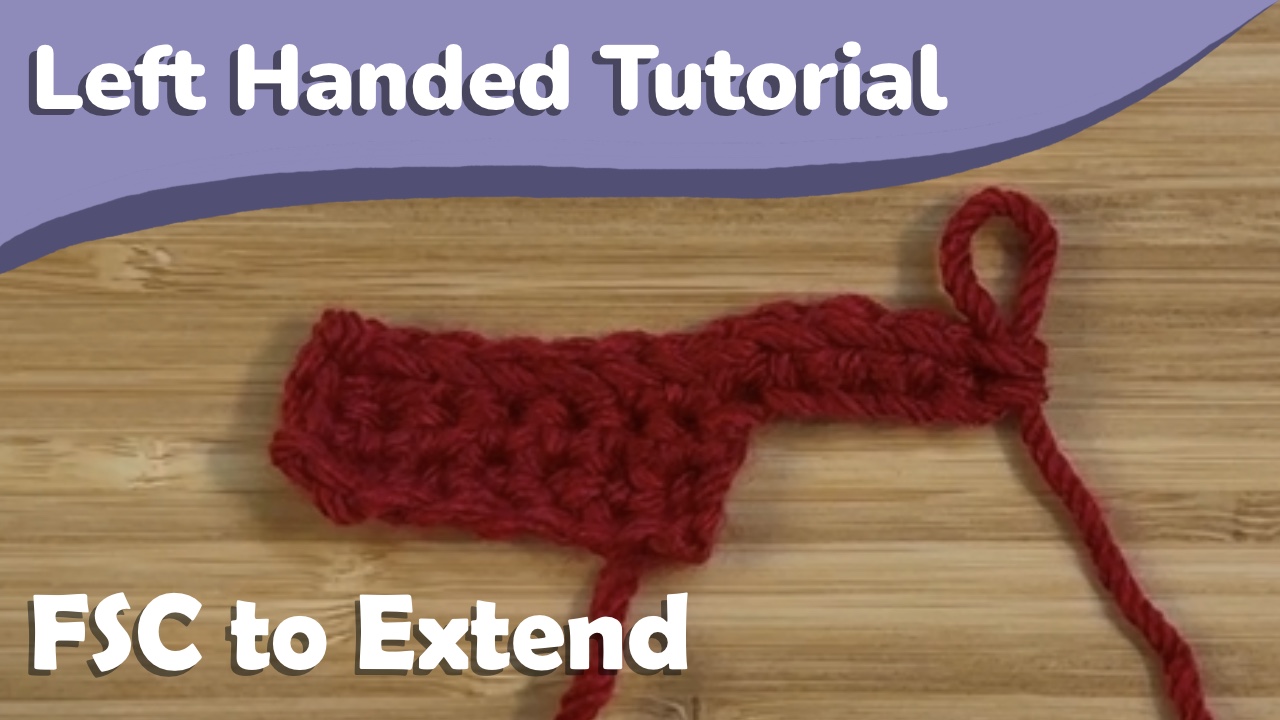
    In this post, we’ll cover how to use a foundation single crochet (fsc) to extend an existing crochet piece. This is great for creating 90° corners on flat pieces, or creating branching in a 3D piece.

    If you aren’t familiar with foundation single crochets, you can find a tutorial for them here.

    If you prefer a video tutorial, you can find that here, and if you’re right handed you can find that tutorial here.

    Working into an existing piece

    The foundation single crochet is worked the same as normal, but the difference is where we begin the stitch. We aren’t working into a chain or into another foundation stitch, since we already have a piece we’re working on.

    To extend a piece with foundation single crochet at the end of a row, you’ll insert your hook back into the last stitch and pull up a loop, as if you’re doing an increase

    Now, you’ll yarn over and pull through just one loop on your hook.

    Then you’ll yarn over and pull through both loops.

    That point where we pull a loop through just one loop on our hook is essentially creating a chain at the bottom of the current row we’re working into. This keeps the fsc’s we’re using to extend this piece in line with the existing row. If we were to chain at the end of this row and work back, we’d be extending on the other side of our row. Using a chain at the start of a row and fsc’s at the end can allow you to make more of a T shape in your piece, with the chain and fsc’s keeping all stitches in line.


  • FSC Into Existing Piece – Right Handed

    FSC Into Existing Piece – Right Handed

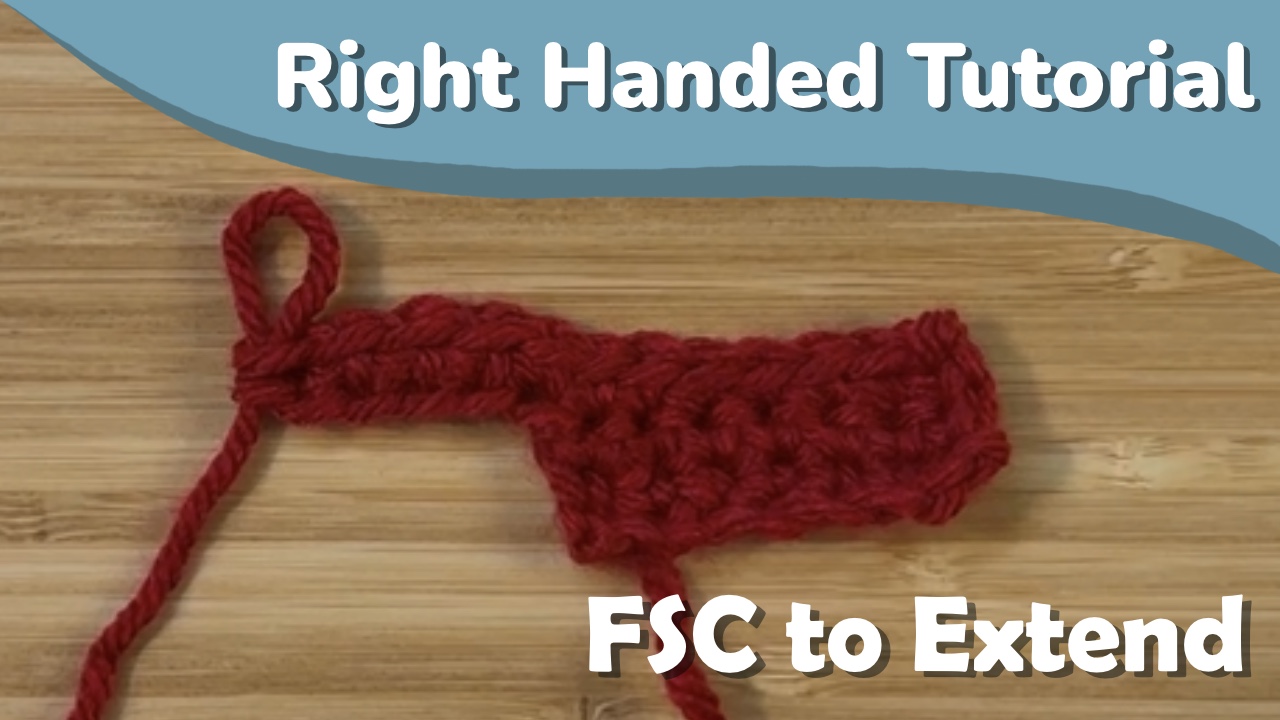
    In this post, we’ll cover how to use a foundation single crochet (fsc) to extend an existing crochet piece. This is great for creating 90° corners on flat pieces, or creating branching in a 3D piece.

    If you aren’t familiar with foundation single crochets, you can find a tutorial for them here.

    If you prefer a video tutorial, you can find that here, and if you’re left handed you can find that tutorial here.

    Working into an existing piece

    The foundation single crochet is worked the same as normal, but the difference is where we begin the stitch. We aren’t working into a chain or into another foundation stitch, since we already have a piece we’re working on.

    To extend a piece with foundation single crochet at the end of a row, you’ll insert your hook back into the last stitch and pull up a loop, as if you’re doing an increase

    Now, you’ll yarn over and pull through just one loop on your hook.

    Then you’ll yarn over and pull through both loops.

    That point where we pull a loop through just one loop on our hook is essentially creating a chain at the bottom of the current row we’re working into. This keeps the fsc’s we’re using to extend this piece in line with the existing row. If we were to chain at the end of this row and work back, we’d be extending on the other side of our row. Using a chain at the start of a row and fsc’s at the end can allow you to make more of a T shape in your piece, with the chain and fsc’s keeping all stitches in line.

  • Foundation Single Crochet – Left Handed

    Foundation Single Crochet – Left Handed

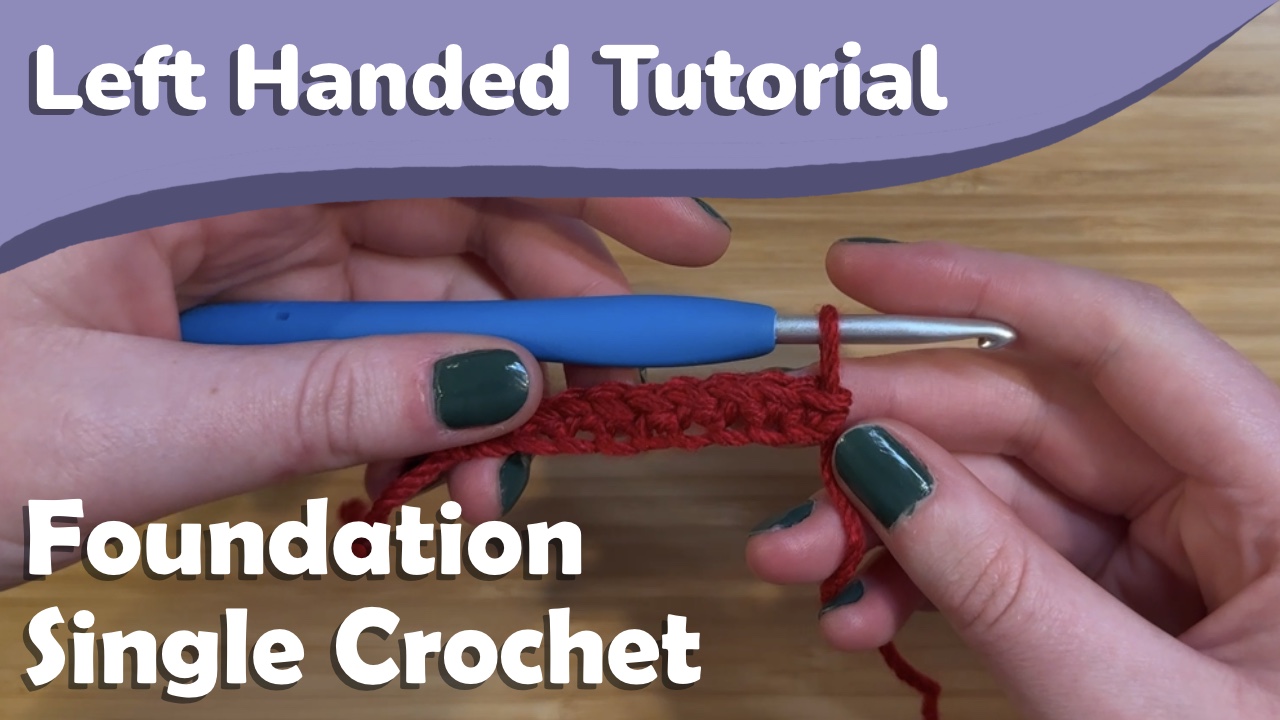
    Foundation stitches allow you to make the first row of your crochet work without a starting chain, as well as extend an existing piece (more on that here!). They don’t always work for everything, and they don’t have as clean of an edge as if you were to work in the back bumps of a starting chain, but they’re a great tool to have in your crochet toolbelt.

    This post focuses on a foundation single crochet, but at the end we’ll also cover using this technique to do the foundation version of other stitches.

    If you prefer a video tutorial, you can find that here, and if you’re right handed you can find that tutorial here.

    Working the First Stitch

    Start with a slip knot on your hook and chain 2.

    Insert your hook into the second chain from your hook, and pull up a loop.

    Yarn over, and pull through the first loop on your hook. This step is what allows us to extend our single crochets into a foundation stitch- it sort of turns the loop we pulled up into a chain.

    Now, yarn over, and pull through both loops on your hook.

    That’s the start of our foundation single crochet!

    Working the Next Stitches

    The process for working a foundation single crochet is the same as for the first stitch, but we’re going to be working in the bottom of the previous foundation stitch.

    Insert your hook into the bottom of the previous foundation single crochet. This is the loop that I mentioned acted as a chain in our first stitch, and is indicated in the image below.

    From here on, the steps to work a foundation single crochet are the same as the first stitch. Pull up a loop.

    Yarn over, and pull through one loop on your hook.

    Yarn over and pull through both loops on your hook.

    For Other Stitches

    The process for working other stitches in a foundation-like way is the same as for single crochet. Start with a chain of length turning chain + 1, as if you’re working a row of 1 stitch. For double crochet, since it requires a turning chain of 3, this means chaining 4.

    You’ll then go into the first chain as if you’re making a row of one stitch. For double crochet, this means yarning over, inserting your hook into that first chain, and pulling up a loop.

    You’re then going to yarn over and pull a loop through one loop on your hook. Again, this is creating the “chain” for our foundation stitches. From there you complete your stitch as normal.


  • Foundation Single Crochet – Right Handed

    Foundation Single Crochet – Right Handed

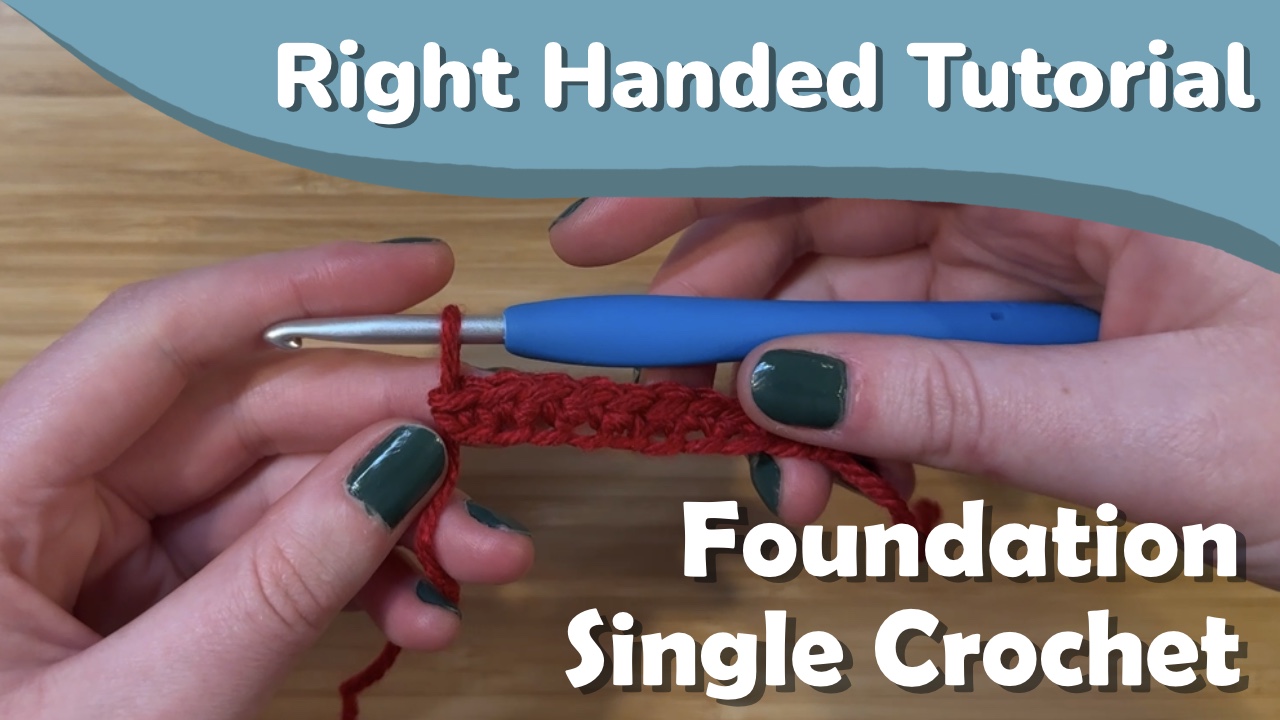
    Foundation stitches allow you to make the first row of your crochet work without a starting chain, as well as extend an existing piece (more on that here!). They don’t always work for everything, and they don’t have as clean of an edge as if you were to work in the back bumps of a starting chain, but they’re a great tool to have in your crochet toolbelt.

    This post focuses on a foundation single crochet, but at the end we’ll also cover using this technique to do the foundation version of other stitches.

    If you prefer a video tutorial, you can find that here, and if you’re left handed you can find that tutorial here.

    Working the First Stitch

    Start with a slip knot on your hook and chain 2.

    Insert your hook into the second chain from your hook, and pull up a loop.

    Yarn over, and pull through the first loop on your hook. This step is what allows us to extend our single crochets into a foundation stitch- it sort of turns the loop we pulled up into a chain.

    Now, yarn over, and pull through both loops on your hook.

    That’s the start of our foundation single crochet!

    Working the Next Stitches

    The process for working a foundation single crochet is the same as for the first stitch, but we’re going to be working in the bottom of the previous foundation stitch.

    Insert your hook into the bottom of the previous foundation single crochet. This is the loop that I mentioned acted as a chain in our first stitch, and is indicated in the image below.

    From here on, the steps to work a foundation single crochet are the same as the first stitch. Pull up a loop.

    Yarn over, and pull through one loop on your hook.

    Yarn over and pull through both loops on your hook.

    For Other Stitches

    The process for working other stitches in a foundation-like way is the same as for single crochet. Start with a chain of length turning chain + 1, as if you’re working a row of 1 stitch. For double crochet, since it requires a turning chain of 3, this means chaining 4.

    You’ll then go into the first chain as if you’re making a row of one stitch. For double crochet, this means yarning over, inserting your hook into that first chain, and pulling up a loop.

    You’re then going to yarn over and pull a loop through one loop on your hook. Again, this is creating the “chain” for our foundation stitches. From there you complete your stitch as normal.